Wedding Venue Marketing: A Strategy for Getting Found & Booked
Google “wedding venue marketing” and you’ll get plenty of advice. Post more Reels. Work on your SEO. Run Facebook ads. Get listed on The Knot. Start a Pinterest account. Collect reviews. Make friends with wedding planners. Exhibit at a bridal show.
None of this is bad advice — most of it is perfectly sensible. I just think we're skipping a rather important step. Because before you spend more money, time and energy getting couples to look at your wedding venue, there's a question worth answering: why should they choose yours?
Not why it's beautiful.
Not why you care deeply about your couples.
Not why the barn has been lovingly restored or the estate has been in your family for three generations.
Why should someone choose your venue when they have six other venue websites open in six other tabs?
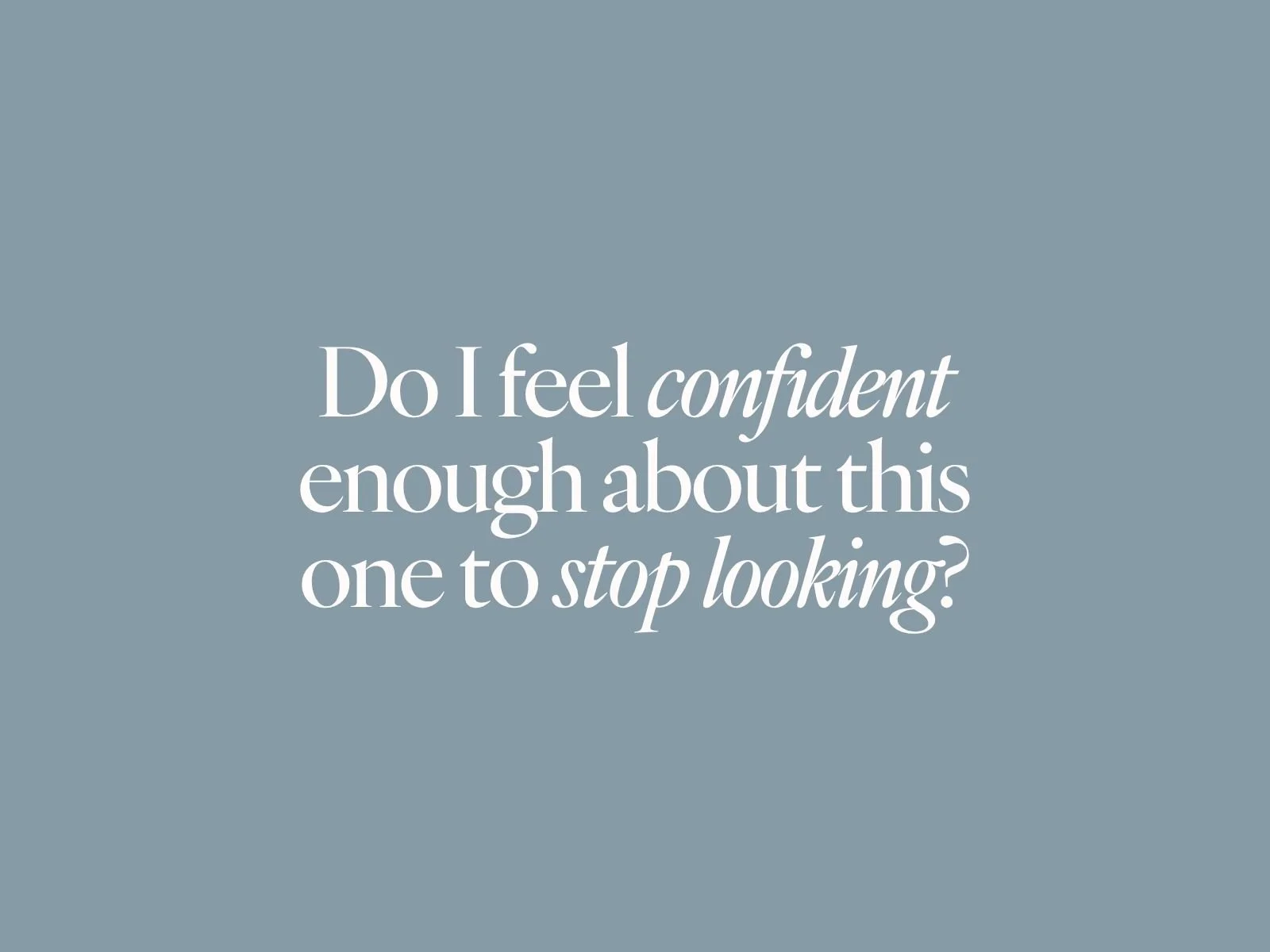
And then, once they do find you, another problem begins. Can they understand what you offer? Can they picture their wedding there? Can they work out whether they can afford it? Can they find answers to the questions making them hesitate? Do they have enough evidence to trust you, and do they feel confident enough to stop looking?
Wedding venue marketing isn't just about getting seen. It's everything that happens between being discovered and being chosen, and I think there are three parts to it: give people a reason to choose you, make sure the right people can find you, and give them enough clarity, evidence and confidence to say yes.
Let's start with the bit most wedding venue marketing advice rushes past.
1. Wedding venue marketing starts with positioning
I've looked at a ridiculous number of wedding venue websites lately, and after a while something strange happens — they start merging into one enormous imaginary wedding venue…
It has a breathtaking setting.
It offers timeless elegance.
It's the perfect backdrop for your special day.
It creates unforgettable memories.
And somewhere, almost certainly, your dream wedding is waiting to become reality.
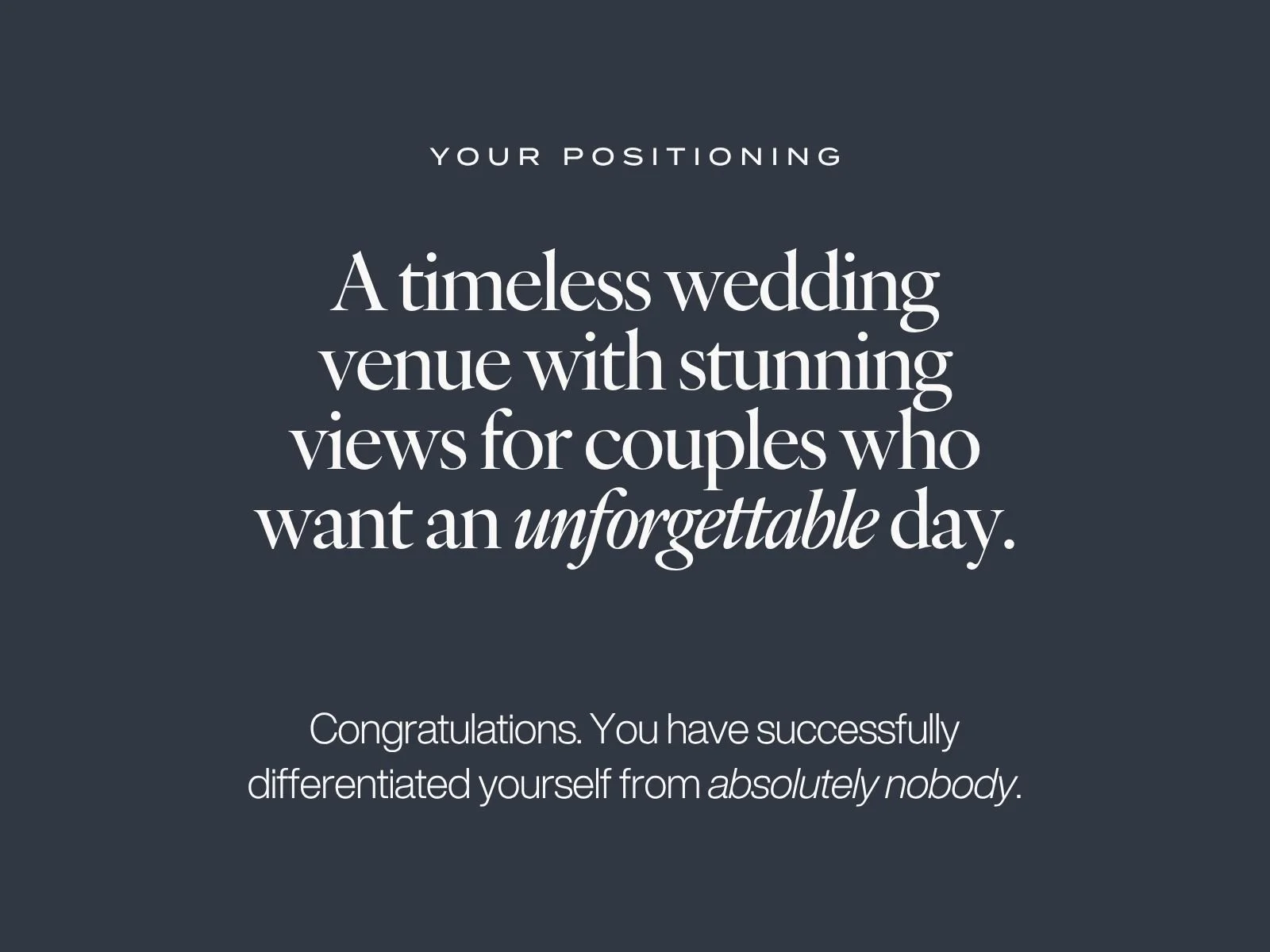
The actual venues might be completely different — a barn in Minnesota, an estate in Virginia, a vineyard in California, a modern event space outside Dallas — but the language gives me almost no reason to remember which was which. That's a positioning problem.
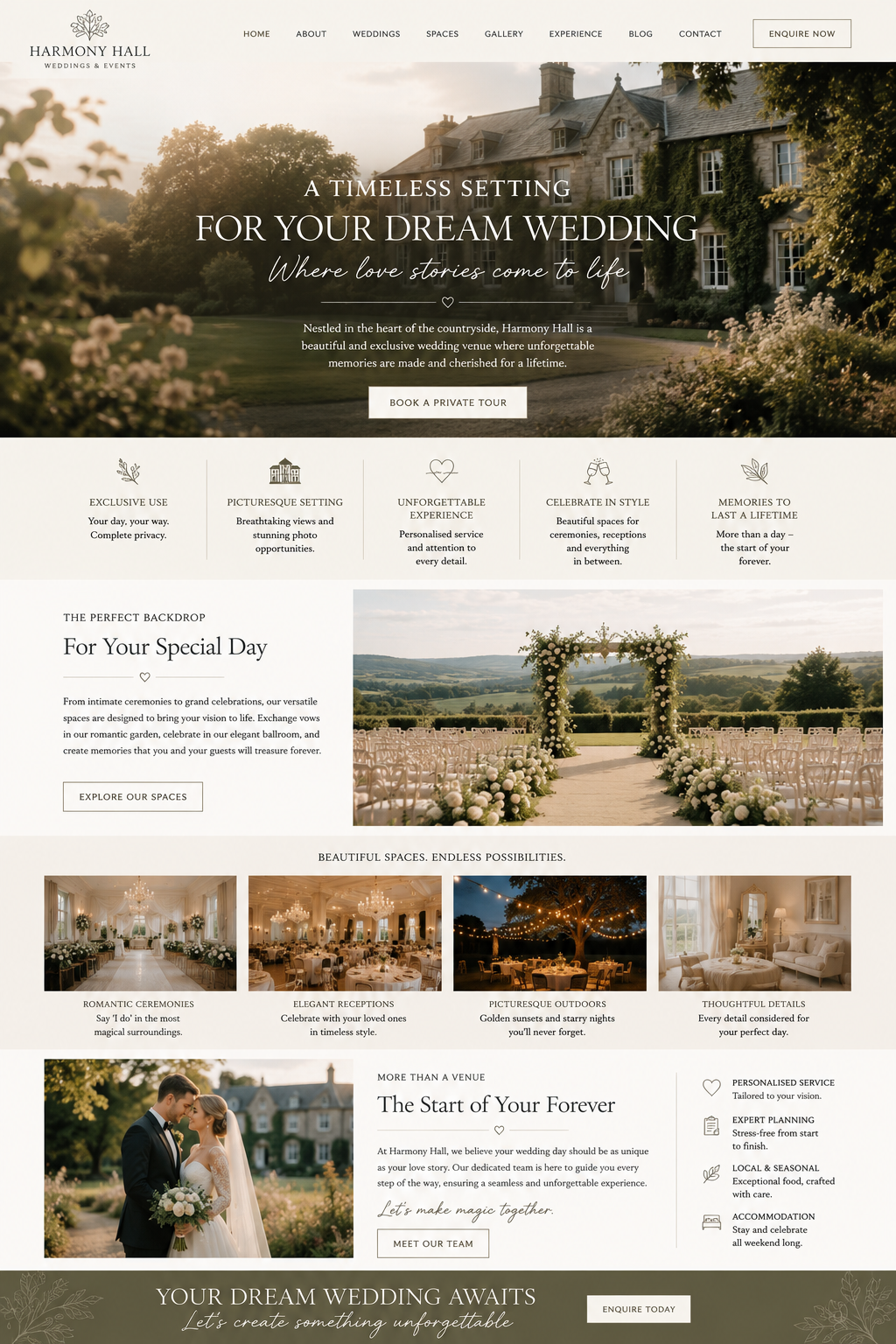
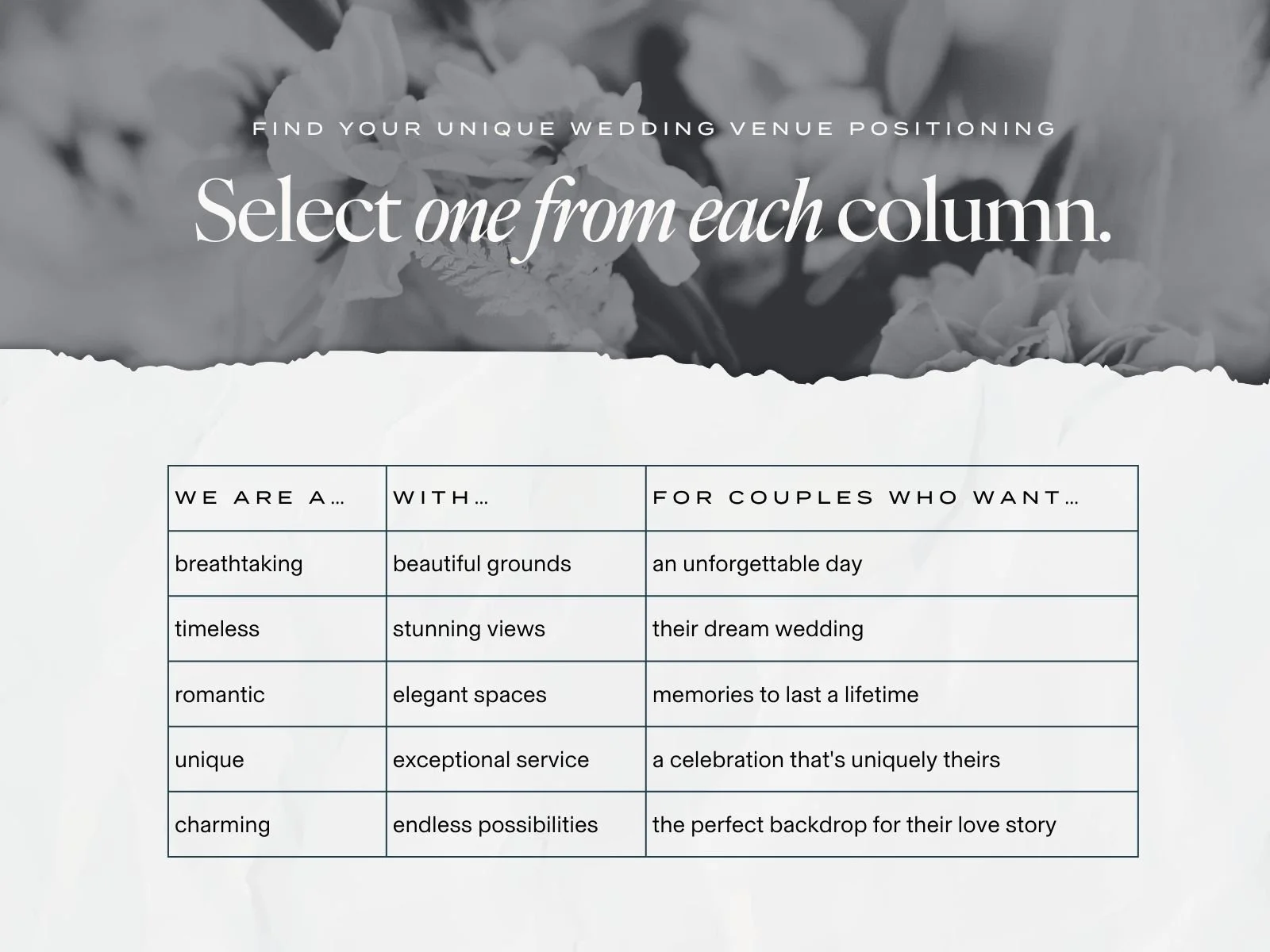
I got tired of looking at wedding venue websites, so I made one that says everything — and positions absolutely nothing.
Positioning sounds like one of those fancy marketing words, but it’s not that complicated.
At its simplest, positioning answers: why this venue instead of the other ones we're considering?
And no, you don't need to discover that you're the only wedding venue in North America with a 19th-century barn, a private waterfall and an alpaca called Kevin. You don't have to be completely unique. You need to give the right couple a meaningful reason to prefer you.
Find out what you’re actually competing with
Your competition isn't necessarily every wedding venue within 50 miles. A couple looking for an intimate coastal venue for 40 people probably isn't also seriously considering a 300-person ballroom next to the airport.
So start with a very simple exercise. Pretend you're your own customer, and search Google for whatever your couples would actually search:
wedding venues in [your location]
barn wedding venues in [your location]
luxury wedding venues near [city]
wedding venues with accommodation in [location], etc.
Open the venues that keep appearing — not one, ten — and leave all the tabs open.
Now look at them together.
What does everyone lead with? What do they promise? What kinds of weddings do they show? What words keep appearing, and what does everyone seem to avoid talking about?
Most importantly: could you swap the logos around and still have roughly the same website?
If I could put your competitor's logo at the top of your homepage and most of the copy would still make sense, you probably have a positioning problem.
Stop describing your venue
Wedding venue marketing tends to focus heavily on describing the property. 200 private acres. Historic barn. On-site accommodation. Exclusive use. Award-winning gardens. Floor-to-ceiling windows. Outdoor ceremony space. These things matter, but they're not necessarily reasons to choose you.
Take “200 private acres.” Great — what does that actually mean to the couple? Maybe it means their wedding is the only event happening there all weekend. Maybe it means there are ten completely different places for photographs. Maybe it means the band can keep playing without someone from the neighboring subdivision complaining at 9:47pm. The acreage isn't the interesting part. What the acreage allows them to do is.
“Accommodation for 40 guests” is a feature. Your closest friends and family can stay together for the whole weekend instead of disappearing into six different hotels after the reception is a reason to care.
“No mandatory vendors” is a feature; you can hire the caterer, florist and photographer you actually want means something.
“Exclusive use” is a feature; there won't be another wedding happening on the other side of the property while you're taking family photographs is much easier to understand.
I’m not against listing features. Features are important for clarity. But good positioning often isn't about finding something new to say. It's about understanding why the things you already have actually matter.
Different isn’t automatically valuable
This is where "find your unique selling proposition" advice can go slightly off the rails. Being different doesn't automatically make you desirable. Maybe your venue has alpacas — I'm delighted for you, and I'd personally be very interested in the alpacas. But unless couples are choosing your venue because they desperately want an alpaca-adjacent wedding, this probably isn't the foundation of your marketing strategy.
The useful question isn't “what makes us different?”.
It's “what makes us worth choosing?”.
Those aren't always the same thing.
Ask the people who already chose you
There's a problem with trying to position your own business: you know too much. You know exactly what it cost to restore the floor in the west wing. You remember the six-month battle over planning permission. You know which stone wall dates back to 1842. Your couples don't. And sometimes the thing you think makes your venue special isn't the thing they cared about at all.
So read your reviews — not for the five stars, for patterns. Maybe you think the main selling point is the view, but review after review talks about how relaxed the weekend felt. Maybe you're marketing the historic architecture while couples keep raving about the fact that everyone could stay on-site. Maybe you barely mention your venue manager, yet half your reviews say some version of Sarah made us feel like everything was under control. That's interesting.
Look through old inquiry emails too, and if you can, ask recently married couples: what other venues did you consider, why did you choose us, was there anything that nearly stopped you booking, what did you tell other people about us, what made you feel sure enough to book? The answers are positioning research, and they're usually considerably more useful than inventing another synonym for "timeless."
“Everyone getting married” is not a target market
This doesn't require creating a fictional customer called Madison, 29, who drinks oat milk, earns $93,000 and spends Sunday mornings doing Pilates before browsing Anthropologie. I don't particularly care whether Madison drinks oat milk. I want to know what that person is trying to accomplish.
Maybe your venue is particularly good for couples who want their families together for an entire weekend. Or people planning from another state who need the process to be incredibly easy. Couples who care more about the dinner than the chair covers. People who want a beautiful wedding but absolutely do not want to spend twelve months DIYing one. Huge families. Tiny weddings. Couples who want complete creative freedom, or couples who want the exact opposite — three decisions, a glass of wine, done. Or people whose main priority is throwing a proper party where nobody turns the music off at 10pm.
Those are different customers.
And suddenly we're getting somewhere more useful than for couples looking for a beautiful and unforgettable wedding day.
2. Now you actually have something to market
This is where most wedding venue marketing advice starts: SEO, Instagram, Pinterest, Google Ads, wedding directories, open houses, vendor collaborations. But those are distribution channels.
They answer: how do we get in front of more couples?
Positioning answers: what are we putting in front of them?
Once you know that, the rest gets easier. You know what to say, what to photograph, which weddings to feature, which search terms matter, which objections to address, which couples you actually want clicking your ads. Now we can work on getting found.
3. Get found when couples are actively looking for a venue
Google is particularly interesting because someone searching wedding venues in Charleston is doing something very different from someone idly watching a wedding Reel. They're looking. That's valuable attention.
And wedding venue SEO isn't just about ranking for "wedding venue."
Think about the combinations people actually use — location (wedding venues in Charleston, wedding venues near Minneapolis), venue type or aesthetic (barn wedding venues Minnesota, luxury wedding venues Charleston, industrial wedding venues Chicago), features (wedding venues with accommodation Wisconsin, outdoor wedding venues Austin), and needs (small wedding venues Dallas, wedding venues for 200 guests Atlanta).
This is where your positioning starts helping your SEO. If your real advantage is that 40 guests can stay on-site for an entire weekend, there may be far more value in becoming the obvious venue for weekend weddings with accommodation than trying to be the 37th result for a broad regional search.
Your website should also give Google enough context to understand what you offer and where you offer it. That means clear page titles and headings, location information, useful pages for your venue spaces and services, real wedding content, and fast-loading photographs with useful filenames and alt text — not stuffing BEST LUXURY WEDDING VENUE MINNESOTA into every available crevice.
I found a particularly interesting example of this when I reverse-engineered a wedding venue whose Google visibility took off after a website redesign. The redesign didn’t magically create authority, but it made the venue dramatically clearer about what it was, where it was and what it should be found for.
Search is only one part of the bigger strategy — here's my complete guide to SEO for wedding venues.
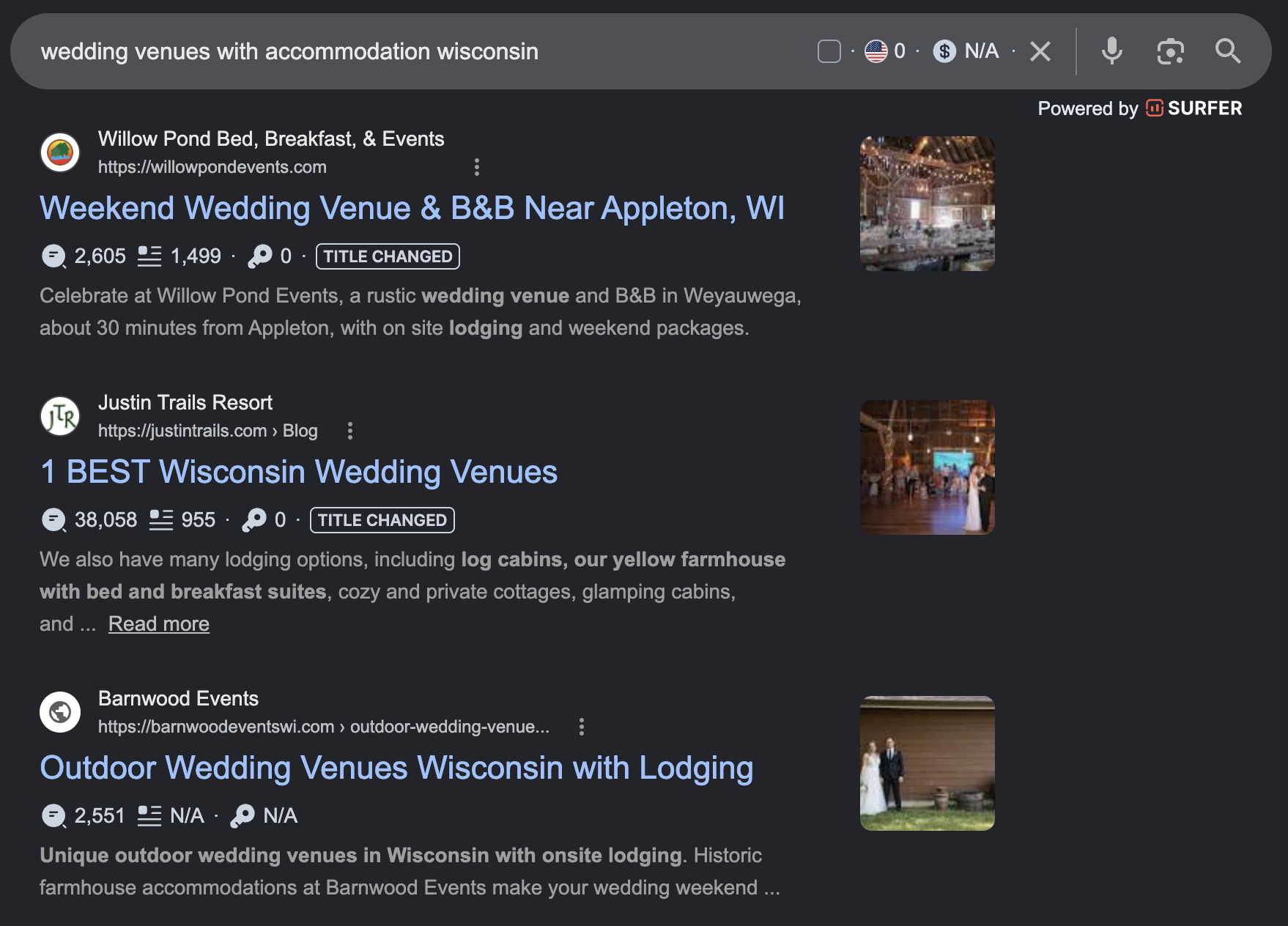
Positioning and SEO start overlapping when couples search for the thing that makes your venue worth choosing.
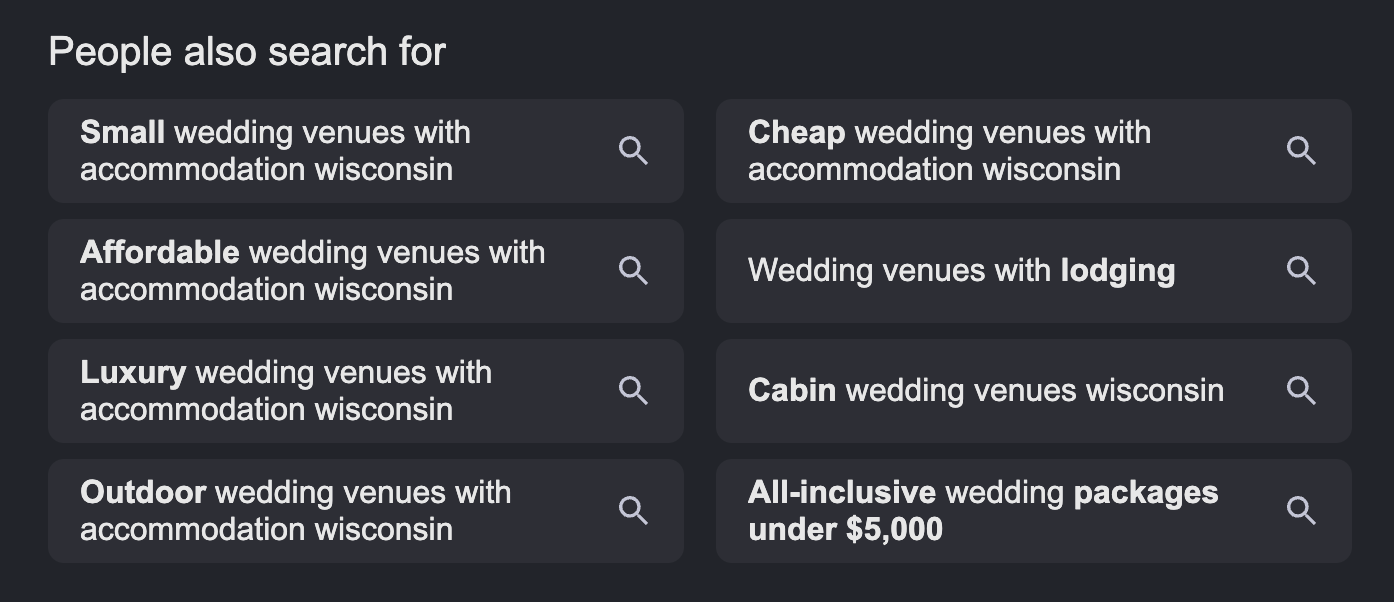
The “People also search for” section in Google search results is GOLD!
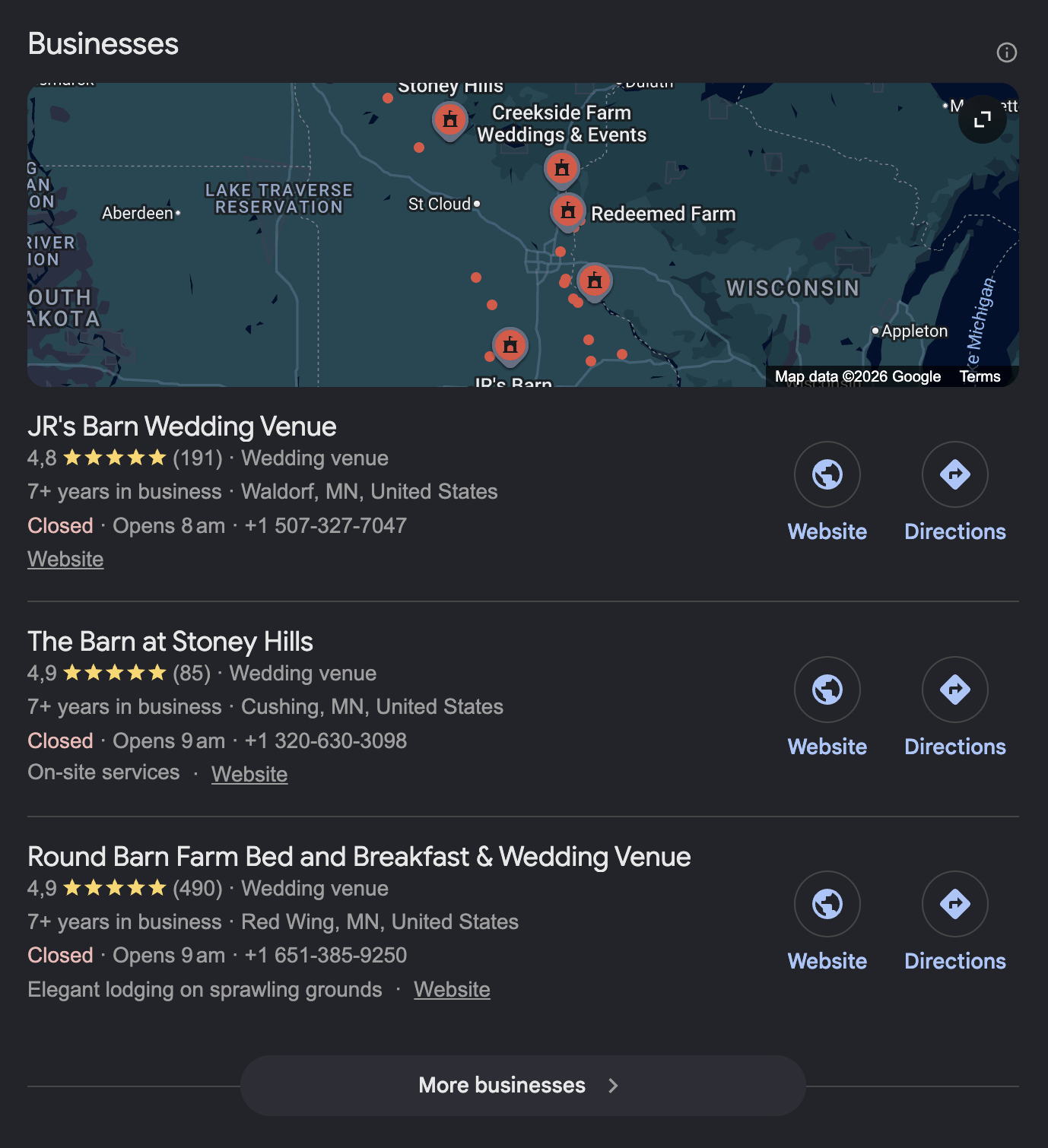
4. Treat Google Maps as part of your marketing
Your Google Business Profile can be one of the first encounters someone has with your venue, so treat it accordingly. Keep your information accurate, choose the right categories, and add good, current photographs — keep adding them rather than uploading twelve when you open the business and forgetting the profile exists.
And collect reviews. But again, I'm less interested in accumulating five-star confetti than in what those reviews actually tell the next couple. "Beautiful venue!" is nice. A review explaining that the couple planned the entire wedding from California, always got a reply within a day and arrived feeling completely confident everything was handled? That's evidence. And evidence is going to become important in a minute.
5. Use wedding directories for discovery, not as your entire strategy
The Knot, WeddingWire, Zola, local wedding blogs and venue directories can put you in front of couples who haven't heard of you. That's useful. But don't confuse being listed with being chosen.
Think about what happens next. Someone sees your venue, Googles it, opens your website, probably checks Instagram, then opens another venue, then another. Your listing got you into the consideration set. It didn't win the decision.
And if you're paying for a listing, I'd want to know more than how many "leads" it generated.
How many were remotely qualified?
How many toured?
How many booked?
What did each actual booking cost you to acquire?
A marketing channel that produces 50 enquiries and no bookings isn't necessarily outperforming one that produces eight enquiries and three bookings.
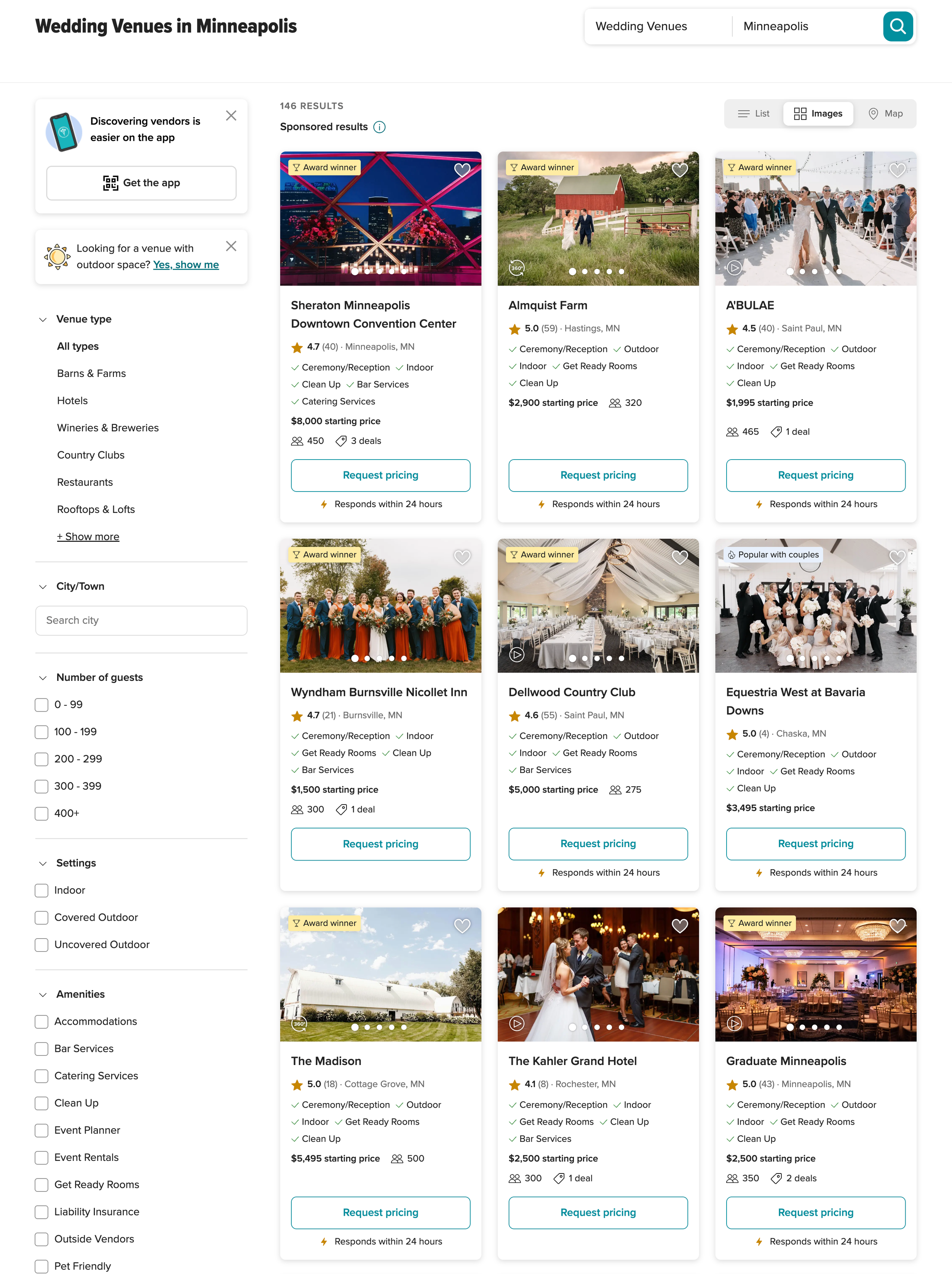
It’s hard to stand out next to 123414 other wedding vendors!
6. Use social media to help couples make the decision
"Post consistently" may be technically correct, but it doesn't tell you what to post. I'd rather think about what job each piece of content is doing.
Discovery content makes someone who doesn't know your venue stop scrolling — an incredible transformation, an unusual view, a particularly spectacular wedding, a strong opinion, something genuinely worth looking at.
Imagination content helps someone picture their own wedding there. Show the same room with 80 guests and 150. Show summer and winter, the ceremony space, cocktail hour, dinner, the dance floor at 11pm. Show people actually using the venue.
Information content answers the questions couples are already asking. What happens if it rains? Can we bring our own caterer? How many people fit at long tables? Where do guests stay? Can we have fireworks? How late can the band play? Useful doesn't have to mean boring.
Evidence content is real weddings, reviews, testimonials, couples talking about their experience, behind-the-scenes moments showing your team fixing the thing that went wrong fifteen minutes before anyone noticed. This reduces uncertainty.
Personality content answers who the humans are that someone will be trusting with a very expensive, emotionally important day. You don't need to become an influencer, but if a couple is going to email, tour and potentially work with you for the next year, knowing who's on the other side of the screen matters.
Suddenly your social strategy isn't we need four posts this week — it's what does someone need to see to move closer to choosing us? Much more useful.
7. Don’t ignore Pinterest
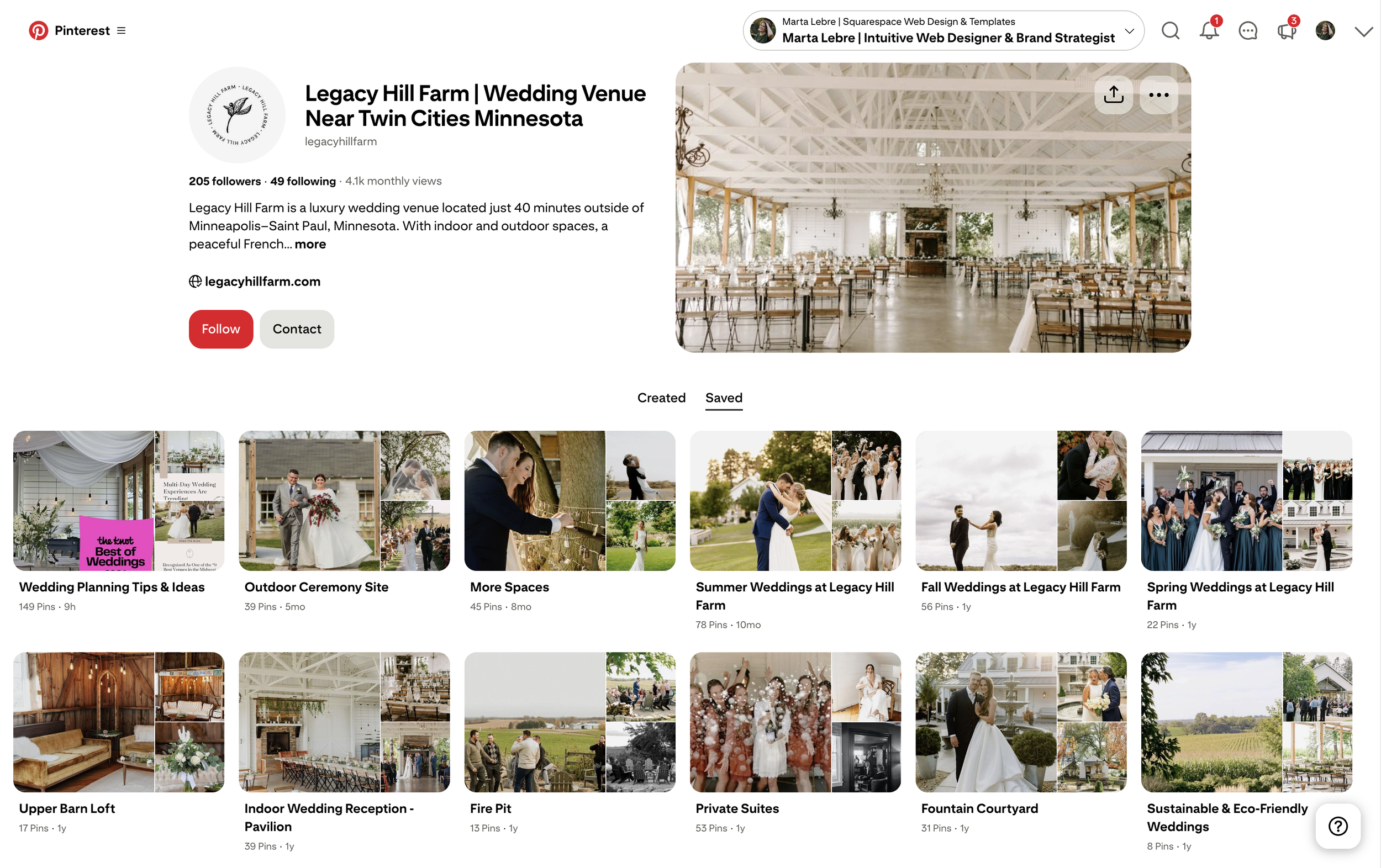
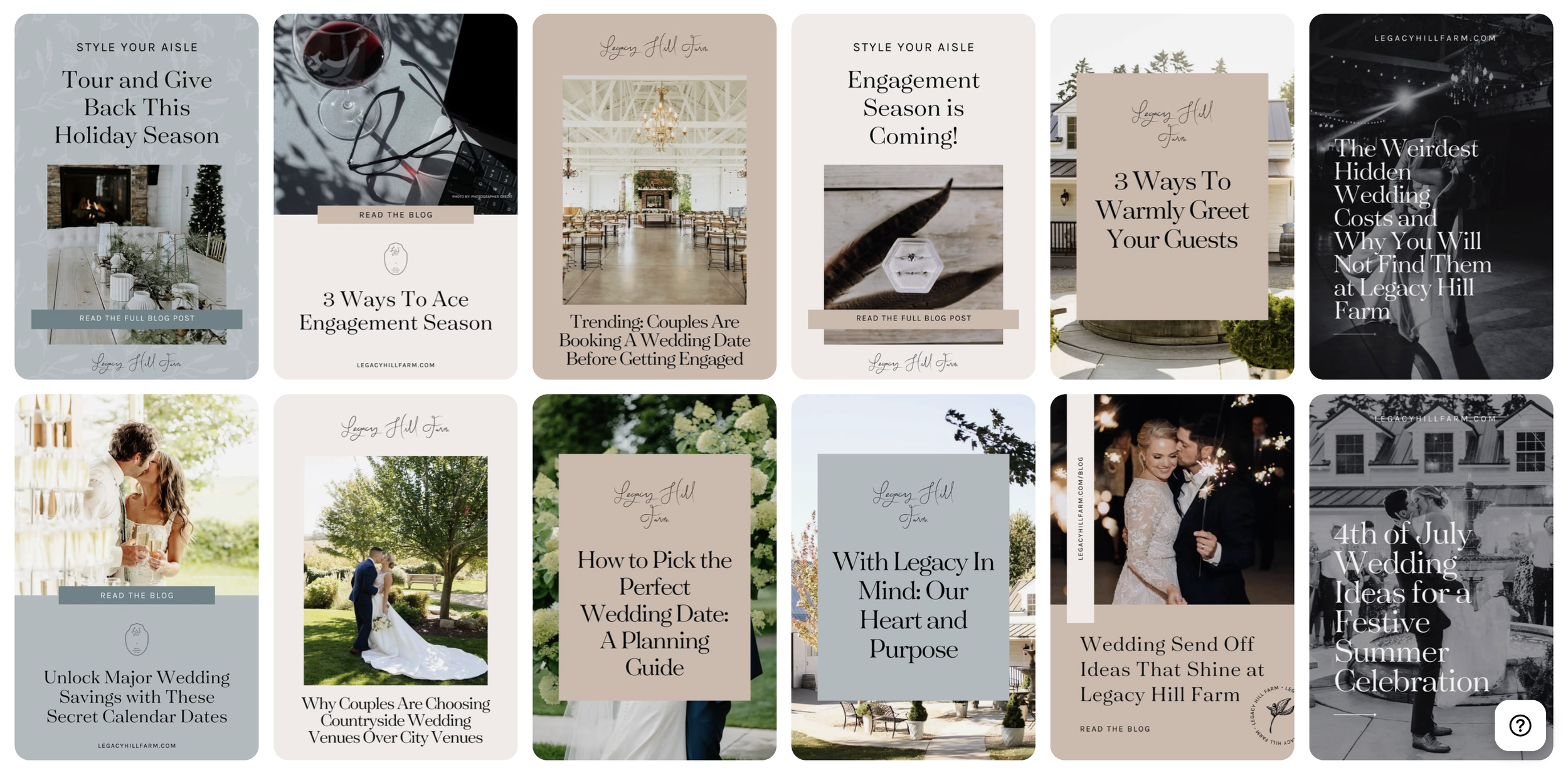
Pinterest is particularly interesting for weddings because people don't only use it like social media — they search, plan, save, and build a visual language for a wedding that doesn't exist yet. That makes your real wedding galleries, ceremony setups, table layouts, seasonal weddings, color palettes and venue-specific inspiration potentially useful long after you publish them.
But don't just upload beautiful images titled Dreamy Day. Describe what someone is actually looking at: a winter wedding at your venue, a 150-person reception setup, an outdoor ceremony in October, a black-tie wedding in your ballroom. Make your content findable.
Wedding venue marketing on Pinterest
8. Build relationships with people who already have your customers’ attention
Wedding planners, photographers, florists, caterers, DJs, hotels — these people talk to couples before, during and after the venue decision. A good relationship can do more than produce the occasional Instagram tag.
A photographer publishes a real wedding at your venue. A planner recommends you to a couple. A florist tags the venue in a Reel. A wedding blog publishes the gallery. You share their work, they share yours, and now you've got distribution, referral, content and sometimes an SEO link coming from the same relationship.
It's also borrowed trust. Someone who already has the couple's confidence is effectively saying yes, I know these people, they're good — which is considerably more powerful than putting "award-winning service" on your own homepage.
9. Understand what you’re buying when you run ads
Paid advertising can work brilliantly, but not all ads are doing the same job.
Google Ads can put you in front of someone actively searching for a wedding venue — they're already in the market.
Meta and Instagram can put you in front of someone who fits your audience before they're searching for you at that exact moment.
Retargeting can remind someone who already visited your website that you exist while they're comparing six venues and slowly losing track of which barn had which chandeliers.
Different jobs, different expectations. And before spending heavily on any of them, I'd make very sure the destination is doing its job — because paying $4 for a click doesn't make a confusing website less confusing. It just means you're now paying people to experience it.
10. Getting found is only half the job
This is where we need to talk about what happens inside someone's head after they find you. A couple lands on your website. They're interested. They're not thinking is this website optimized for conversions — they're thinking things like:
Can we afford this?
Will everyone fit?
Does this feel like us?
What happens if it rains?
Is this going to be a nightmare to organize?
Where will everyone stay?
Will our parents like it?
Why is this venue $5,000 more than that one?
What aren't they telling us?
Can I actually picture us getting married here?
And eventually…
That's the part of wedding venue marketing I'm most interested in, because choosing a wedding venue is a fairly unusual buying decision. It's expensive, it's emotional, and for most people it's unfamiliar. There are a lot of variables. And if you get it wrong, you can't exactly redo the wedding next Tuesday.
Most couples have never bought a wedding venue before. They don't necessarily know what one should cost, what should be included, or which questions they're supposed to ask. They don't know which restrictions will matter six months from now. So they look for signals. They compare, gather information, look at photographs, read reviews, ask friends, open more tabs, and try to reduce uncertainty until one option feels safe enough to choose.
Your website has a very important job in that process.
11. A high-converting wedding venue website makes it easier to say yes
When people talk about conversion optimization, the conversation can get very weird very quickly. Button colors. Pop-ups. Urgency. More CTAs. Put the button above the fold! Make it orange!
I don't think a high-converting wedding venue website is one with seventeen strategically positioned BOOK A TOUR buttons and a pop-up demanding my email address twelve seconds after I arrive. It's one that makes it easier for the right couple to make a confident decision, and that usually means doing five things well.
Help me understand it
How many guests fit? What does it cost? What's included? What spaces do we get, and for how long? Where does the ceremony happen, and where does dinner happen? What happens if it rains? Where does everyone stay? Are there restrictions? What's the booking process? Clarity reduces work, and that's important when someone has eight venue tabs open.
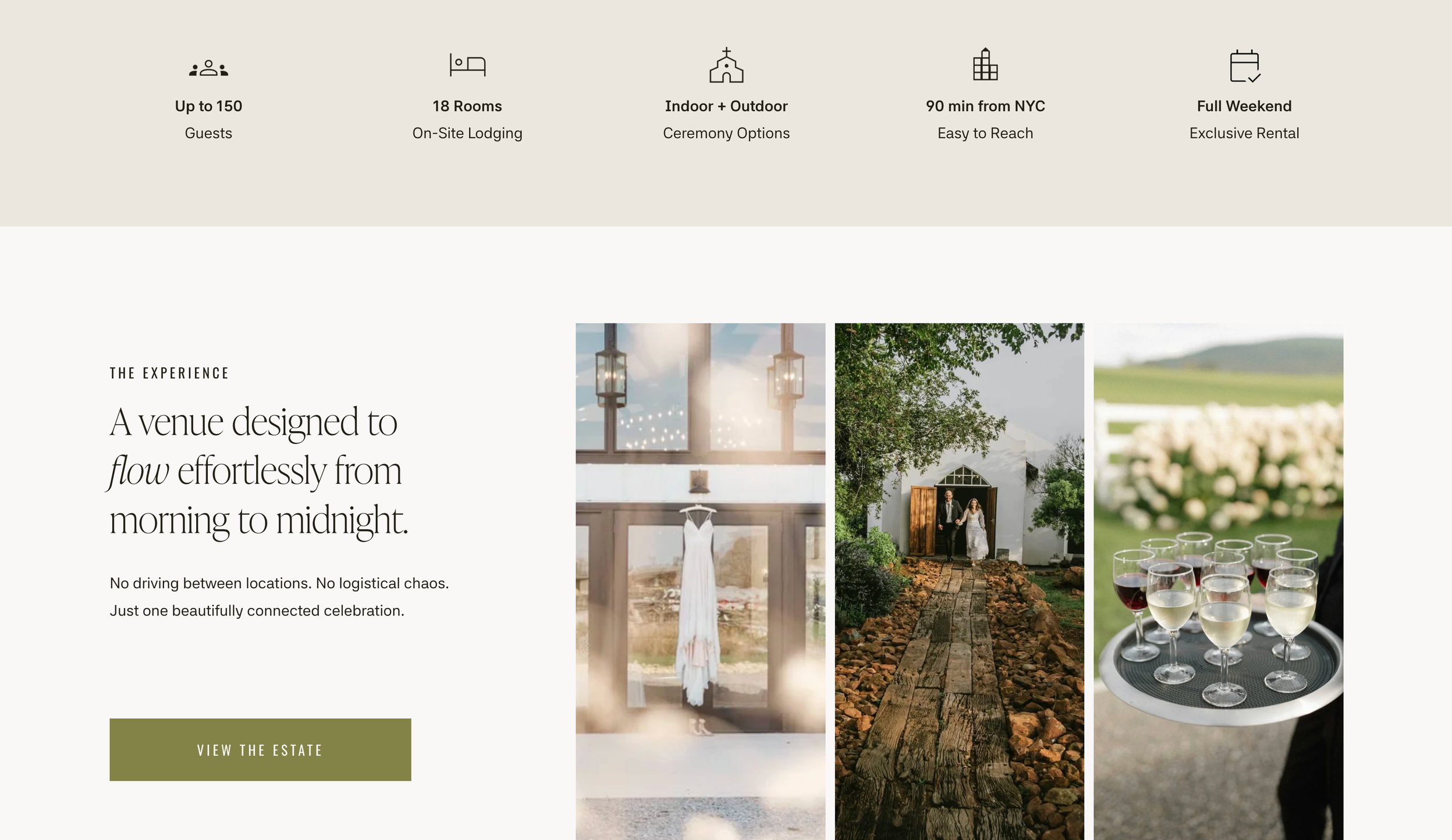
The section in my wedding venue website template that helps people understand what it is at a glance.
Help me picture it
This is where photography becomes more than decoration. Don't only show me that the venue is beautiful — help me understand what 120 guests look like in the room, where cocktail hour happens, what an indoor ceremony looks like if it rains, where we'll get ready, what dinner looks like, what happens after dark. The less work I have to do to mentally construct my wedding there, the easier the venue is to seriously consider.
Give me evidence
Anyone can write exceptional service, unforgettable experience, the perfect place for your special day. Those are claims. Now show me why I should believe them: a detailed review, a real wedding, photographs, specific examples, numbers, a story about how your team handled something going wrong. A bride saying it poured all morning and the indoor ceremony was ready before she even had time to panic.
Claim → evidence is much more persuasive than claim → claim → claim → BOOK A TOUR.
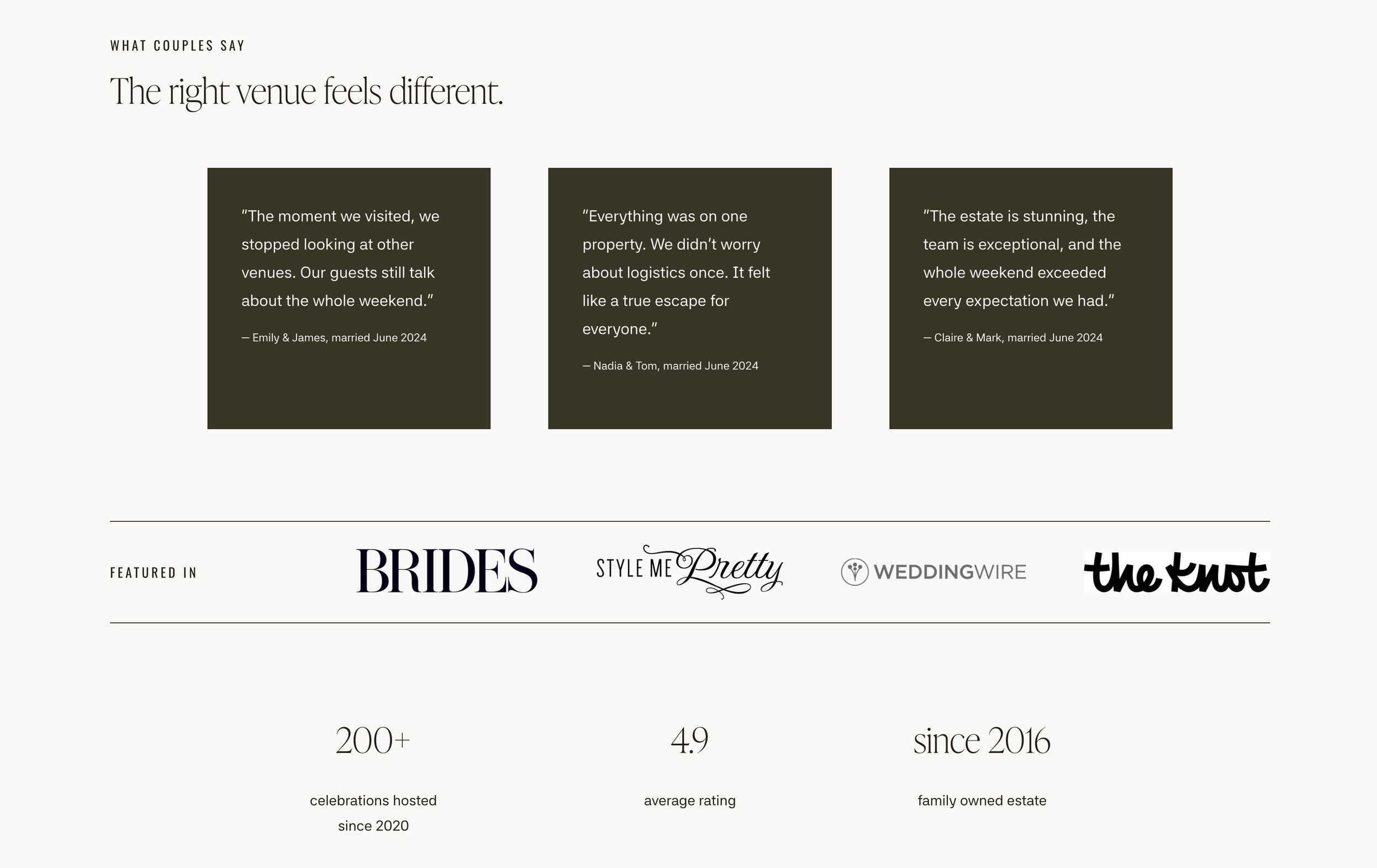
Social proof! Claims tell me you're good. Reviews, numbers and third-party recognition give me reasons to believe you.
Answer the objection before I have to ask
Venue owners often tell themselves they'll ask that on the tour. Maybe. Or maybe they'll never book the tour. If someone needs accommodation for 30 guests and can't work out whether you have it, they may not enquire to find out. If they're terrified about rain and can't see an indoor ceremony anywhere on the website, they may quietly move on. If they have a $12,000 venue budget and can't find even a rough indication of price, they may assume you're too expensive. An unanswered question doesn't always generate an enquiry — sometimes it generates an exit.
Let the next step match where I am in the decision
Someone who discovered your venue 45 seconds ago may not be ready to BOOK A TOUR!!! They might be ready to see pricing, explore real weddings, check capacity, look at accommodation, understand packages, see available dates — then enquire, then tour, then book. A good website lets the decision progress instead of constantly trying to drag someone to the final step.
12. Your photography should reduce the imagination gap
Wedding venues have a peculiar problem: they often have access to hundreds of extraordinary professional photographs and still manage to leave me unsure what the venue actually looks like. That's because photographers aren't photographing the wedding for your website — they're photographing it for the couple. Which means you may have 47 incredible portraits at golden hour and not one photograph showing the entire reception room with 150 people sitting in it.
Beauty matters, of course. People are choosing a place partly because of how it looks and how it makes them feel. But venue photography also has a practical job: show scale, show people, show different layouts, show the transition from ceremony to reception, show where cocktails happen, show what an outdoor wedding looks like when the weather is less than perfect, show the venue at night, show the spaces that aren't the hero shot.
You're reducing the gap between "this place looks pretty" and "I can see our wedding happening here."
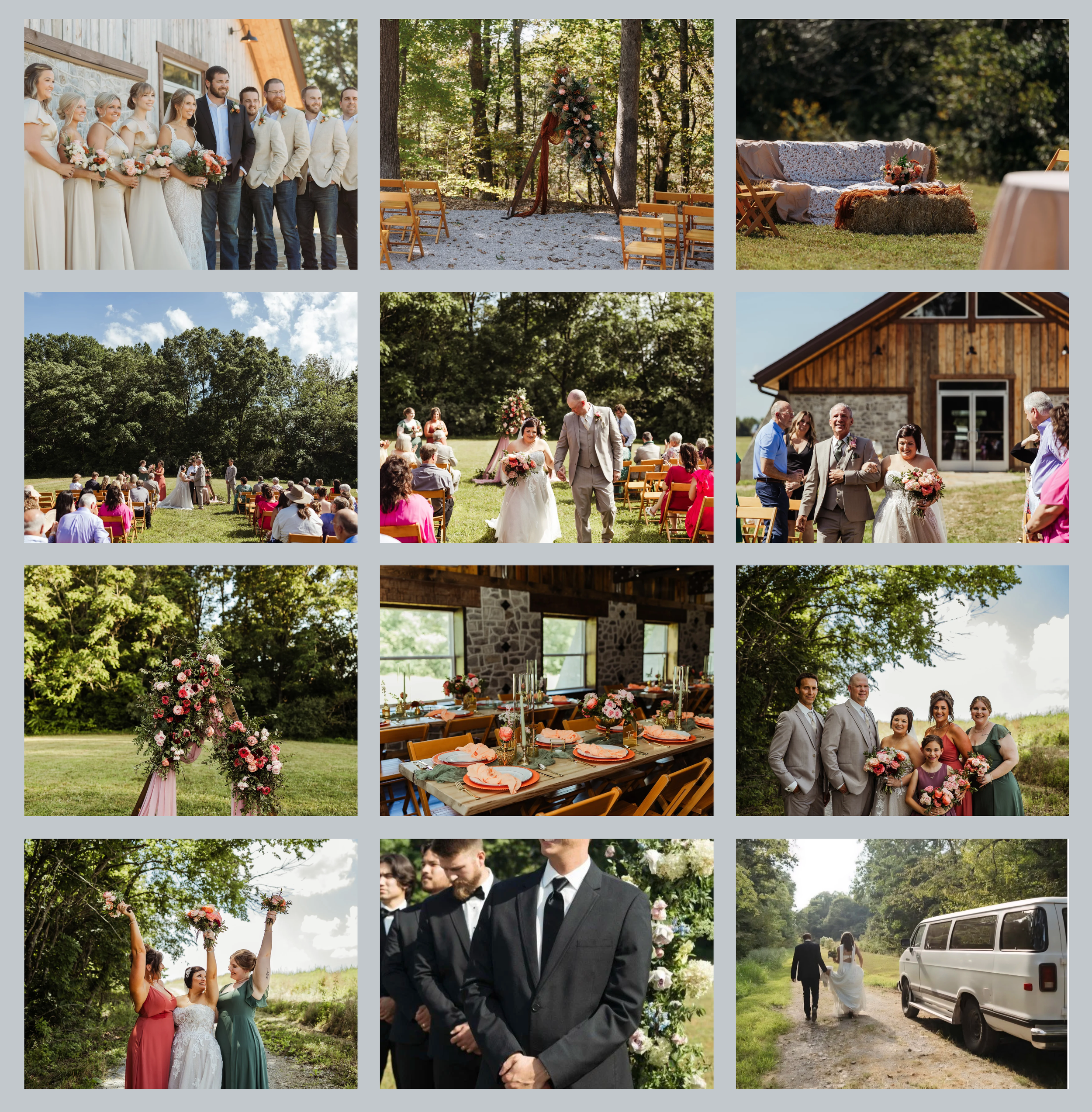
Pretty pictures, but I have very little idea about what the venue looks like.
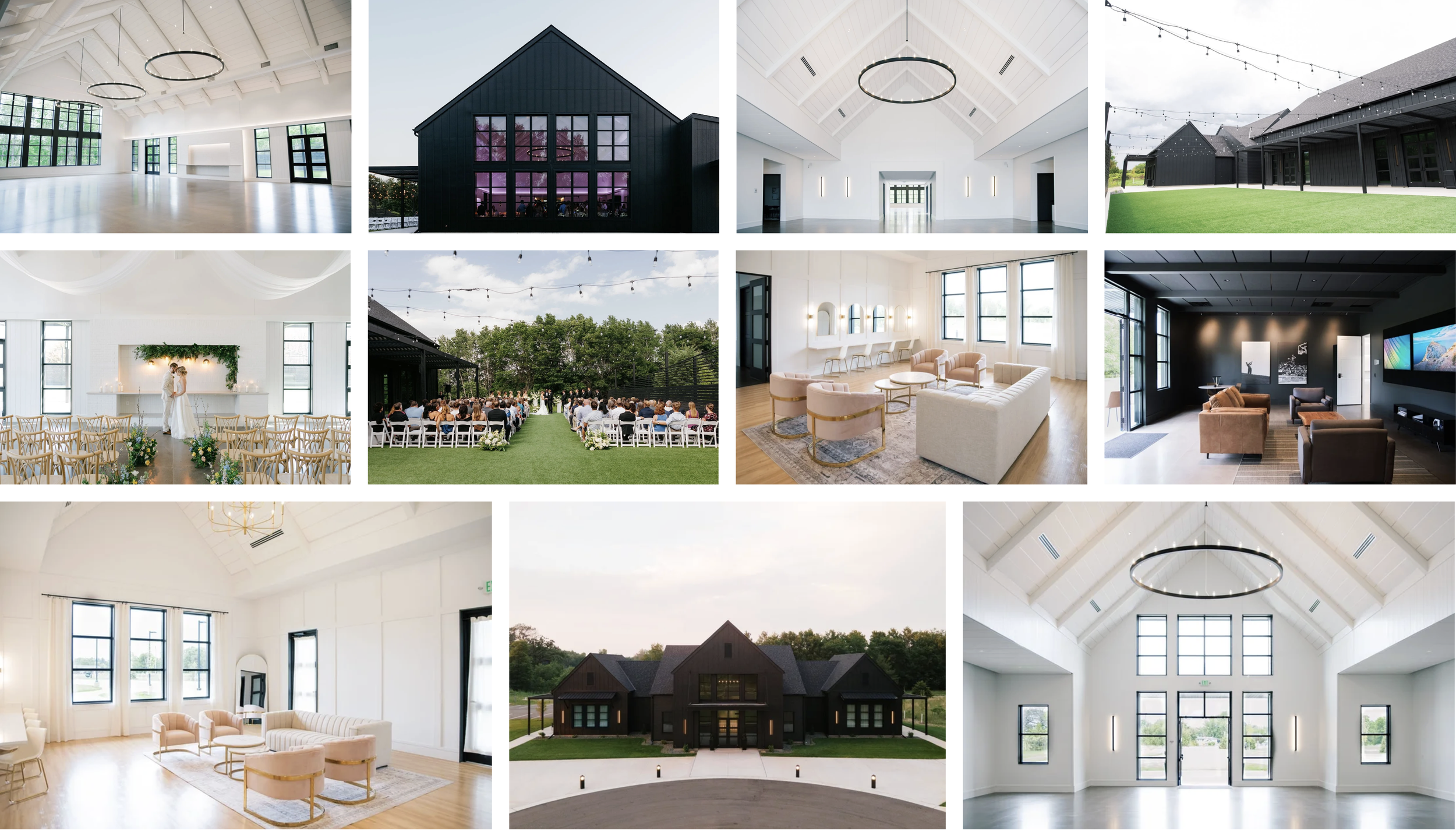
I can see the venue I’m buying!
13. Your website should be built around the decision, not the venue
I've analyzed 100 wedding venue websites, and one of the biggest problems wasn't bad design — quite the opposite. There are a lot of very beautiful wedding venue websites. The problem is that many of them are much better at creating a mood than helping someone make a decision.
Beautiful photographs. Beautiful typography. A sentence about unforgettable celebrations. And then I have to become Sherlock Holmes to find out whether 120 people fit in the room. That's not just a website problem, it's a buying problem. A couple isn't browsing because they suddenly developed an academic interest in wedding venues — they're trying to decide whether yours stays on the list.
So structure the website around what they need to know, not around what you want to say about the property: pricing, capacity, spaces, what's included, real weddings, accommodation, rain plans, location, restrictions, FAQs, the process, the people they'll be dealing with, the evidence that what you're promising is actually true.
The website doesn't need to answer every conceivable question — it needs to answer enough of the important ones that someone feels comfortable taking the next step.
14. Give people enough pricing information to qualify themselves
I know. Wedding venue pricing, everyone's favorite subject. There are perfectly reasonable reasons why you might not be able to put one neat number on the website — season changes it, day of the week changes it, guest count changes it, packages change it, catering changes it. Fine.
But there's a substantial difference between "weddings start at $8,000, most of our couples spend between $12,000 and $16,000 depending on date and guest count" and "contact us for pricing."
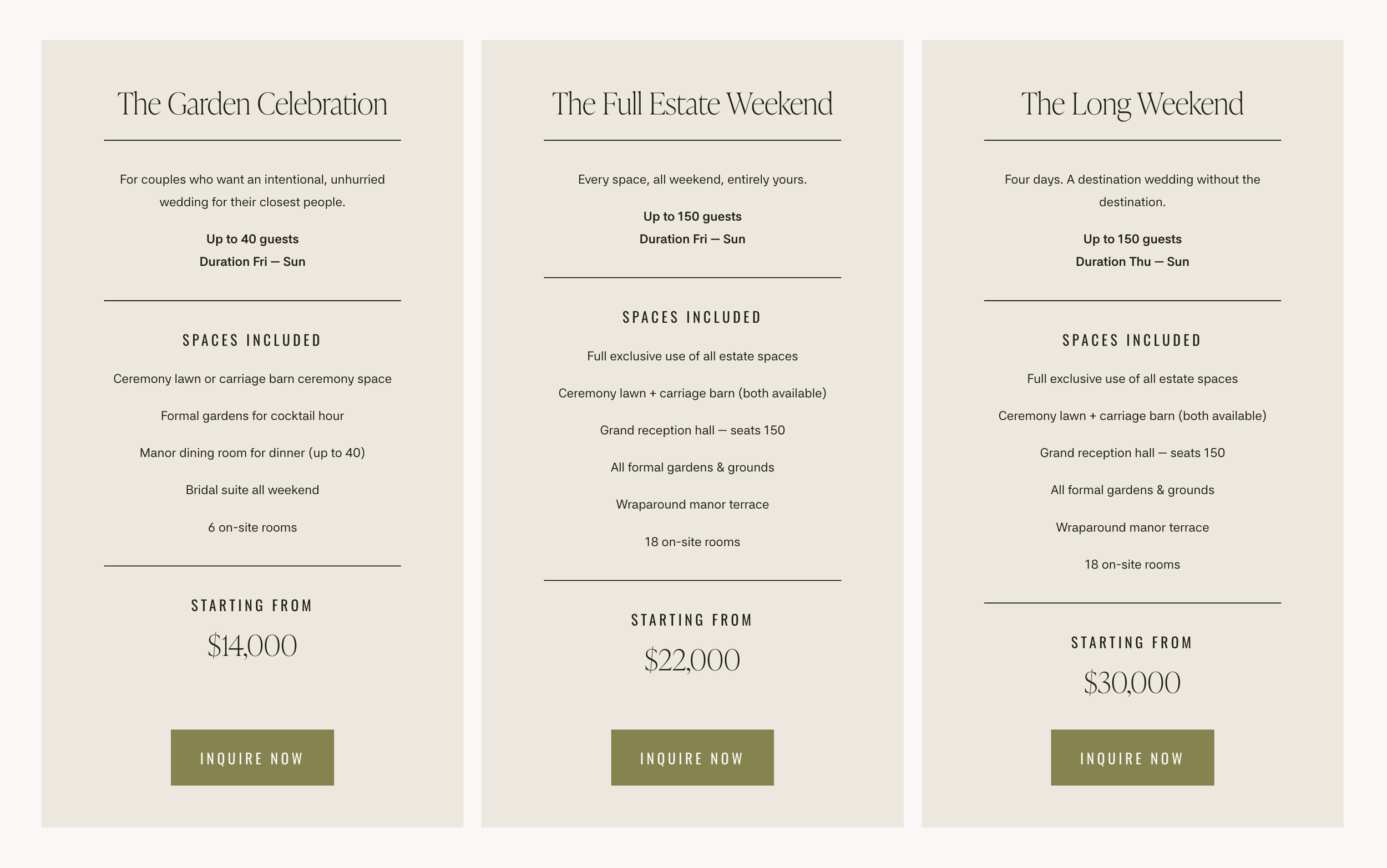
Transparent pricing makes it so much easier!
One helps me work out whether this venue could realistically be mine. The other gives me homework.
You don't necessarily need to answer every possible pricing question before someone contacts you, but hiding all indication of price means you also can't expect people to qualify themselves.
Then you get enquiries from people with a $5,000 budget for a $20,000 venue and everyone wastes time.
Good marketing isn't about generating the maximum possible number of leads — it's about generating more of the right ones.
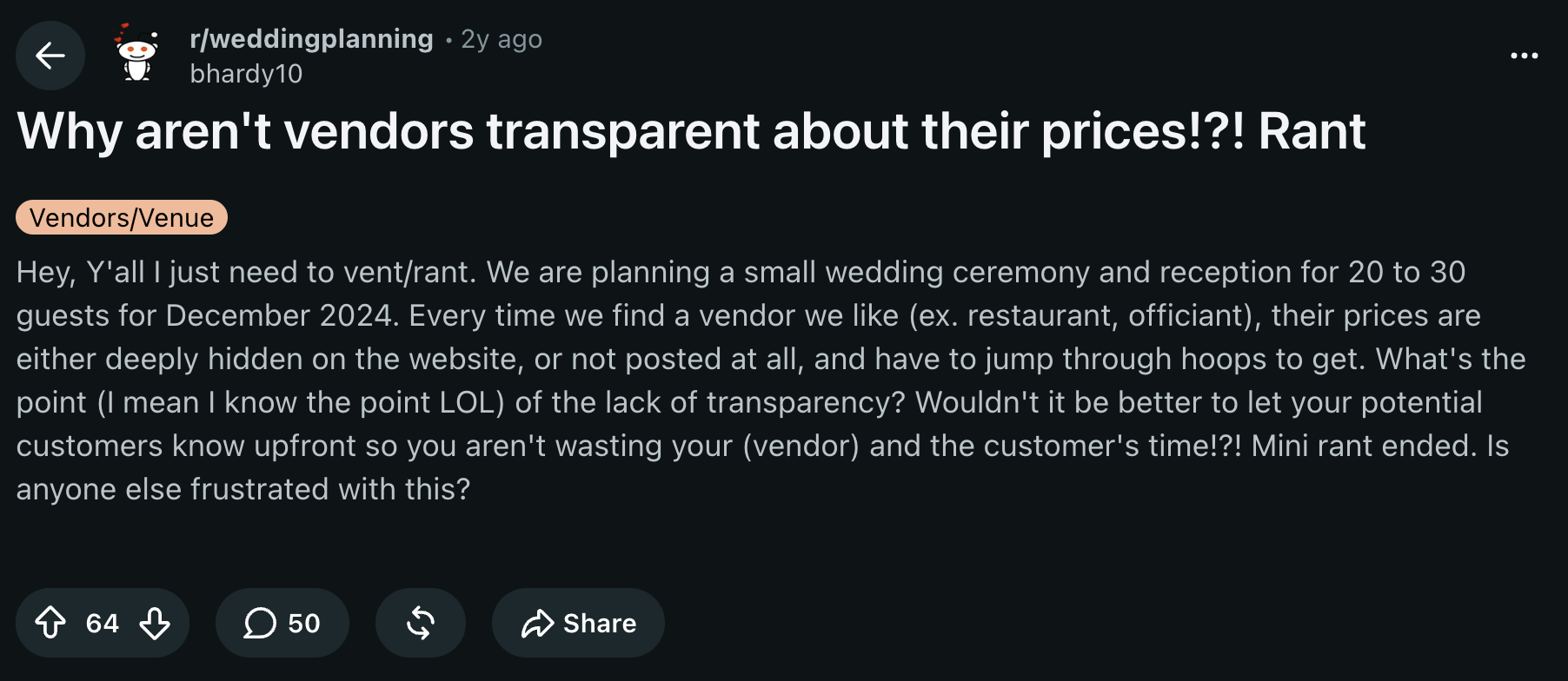
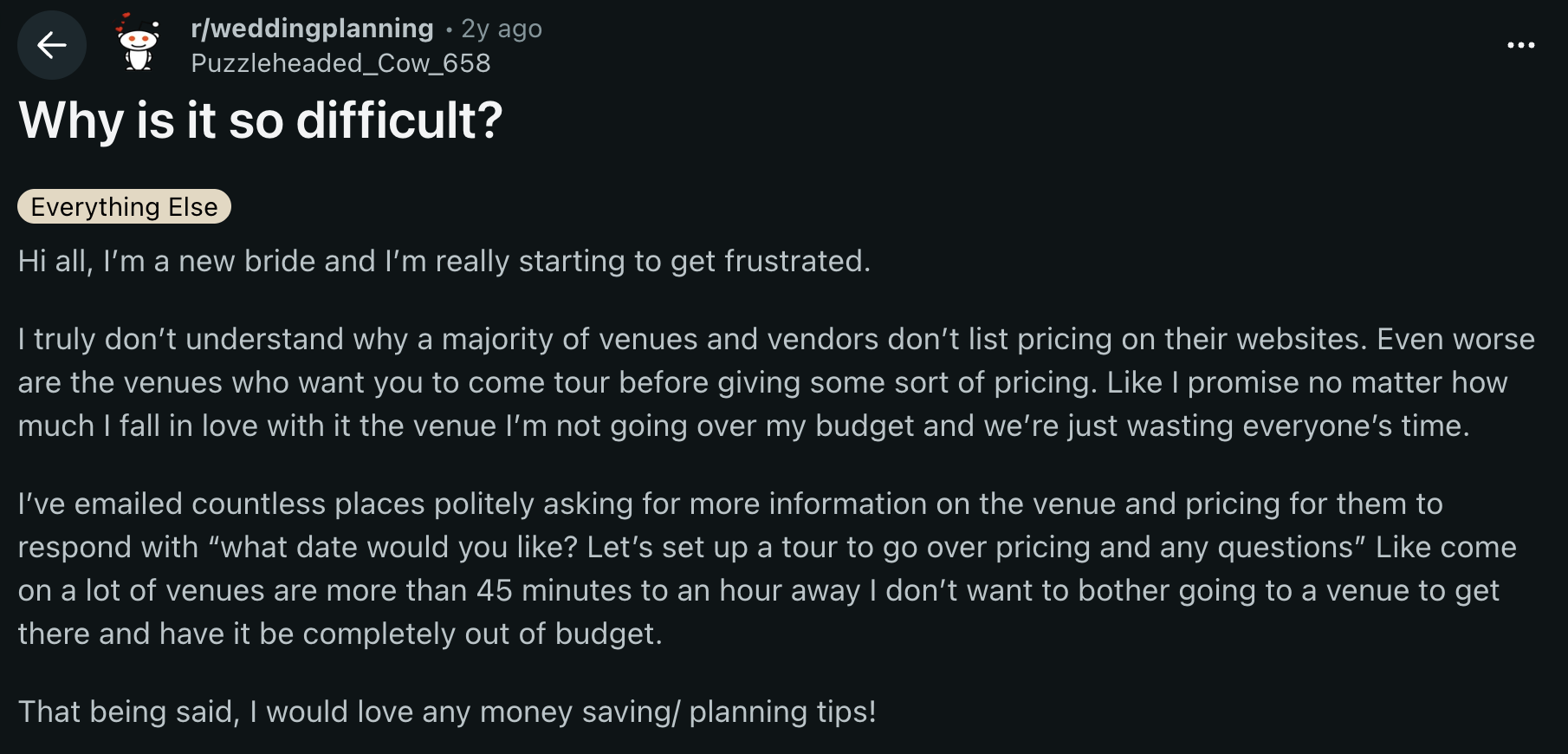
Yep, price transparency is a must.
Don’t confuse collecting an email address with generating a lead
I'm not a huge fan of making couples hand over their email address just to find out what your venue costs. If someone has to fill out a form, check their inbox, download a 14-page PDF and scroll past six pages of beautiful photographs before discovering that weddings start at $18,000, you haven't necessarily generated a lead. You may have simply put a toll booth in front of basic qualification information.
I'd rather put enough pricing directly on the website for couples to work out whether the venue is realistically within budget, then offer the full wedding guide — packages, floor plans, sample timelines, accommodation, upgrades, FAQs — as an optional download.
Yes, gating your prices might increase the number of email addresses in your CRM. But if half of those people were only trying to answer “Can we afford this?”, you've improved the conversion rate by changing what you're counting, not necessarily by getting more people closer to saying yes.
15. Make the inquiry feel like the natural next step
Think about the difference between “hi, can you please send pricing and tell me what's included?” and “we love the venue, your weekend package looks exactly like what we're looking for and our date is flexible — could we come tour next Saturday?”
Both are leads.
They are not the same lead.
The second person has already done much more of the decision-making, and your website helped.
Now make the next step equally easy. Keep the inquiry form reasonable, tell people what will happen after they submit it, and reply quickly. Send useful information rather than another beautifully designed PDF containing six photographs and no answers. If the next step is booking a tour, make that process straightforward — every bit of unnecessary uncertainty here gives someone an opportunity to wander back to Google.
16. Remember that the tour is marketing too
This is where the neat little digital marketing funnel tends to end. Lead generated! Marketing's job is done! Except the couple hasn't bought anything. They're standing in your ballroom trying to decide whether this is where they're going to get married, and there's a very good chance they're touring two other venues this weekend.
The tour is part of the buying experience. What do you show them, what do you explain, what questions do couples repeatedly ask, what objections appear? Can they see what the venue would look like on their wedding day rather than on a random Tuesday morning with the chairs stacked against a wall? What happens after the tour — do you follow up, and does the follow-up answer the questions they raised?
If lots of couples love the website, enquire, tour and then disappear, you do not necessarily have a traffic problem. Something is happening later, and that's worth investigating before buying more traffic.
17. Measure the whole journey, not just traffic
This is perhaps the least glamorous part of wedding venue marketing.
It's also the bit that tells you what to do next.
Think of the journey roughly like this: visibility → website visits → qualified enquiries → tours → bookings. Then look for the leak.
Lots of Google impressions, very few clicks? Maybe you're ranking for the wrong searches, maybe the search result isn't compelling, or maybe other venues look like a better match for what that person wants.
Plenty of website traffic, hardly any enquiries? Now I'd look at positioning, information, pricing, photography, trust, whether people can understand the venue, and whether you're attracting the right visitors in the first place.
Plenty of enquiries, few tours? Look at lead quality and what happens after the enquiry. Are people discovering the price for the first time? Are responses slow? Is there too much friction? Did the website create expectations that the brochure immediately destroys?
Lots of tours, few bookings? This is particularly interesting, because at that point another 10,000 Instagram views may not solve anything. I'd want to know which venues they're booking instead, what happens on your tours, what objections keep appearing, how your pricing compares, and whether something promised online feels different in person. Whether the reason to choose you was ever particularly clear.
"We need more marketing" is sometimes true. And sometimes it's what we say when we haven't figured out where the actual problem is.
The goal isn't more attention. It's more of the right people saying yes.
You absolutely need visibility. SEO matters. Instagram can matter. Pinterest can matter. Directories, planners, photographers, advertising, open houses and bridal shows can all matter. But getting found and getting chosen are two different problems, and good wedding venue marketing connects them.
Positioning gives the right couple a reason to consider you. Marketing gets you onto their radar. Your website and sales experience give them the clarity, evidence and confidence they need to choose you.
So before you add another marketing channel, open ten competitor tabs. Look at what everyone is saying. Read your reviews. Talk to the people who chose you. Figure out what your venue makes possible that actually matters to the couples you want. Then follow their journey — from Google search, to Instagram, to your website, to pricing, to inquiry, to tour, to the moment they either sign the contract or quietly choose somewhere else — and ask: where are we losing them?
Because that's the part I'd fix before posting another Reel.

Something isn’t adding up?
Sometimes a venue has traffic but not enquiries. Enquiries but not tours. Tours but not bookings. Or plenty of people saying "your venue is beautiful" before quietly choosing somewhere else.
Those are my favorite kinds of problems. In a Rabbit Hole Investigation, I follow the customer journey, look at your competitors, website, positioning and whatever evidence we can get our hands on, and try to figure out what's actually stopping people from saying yes.