
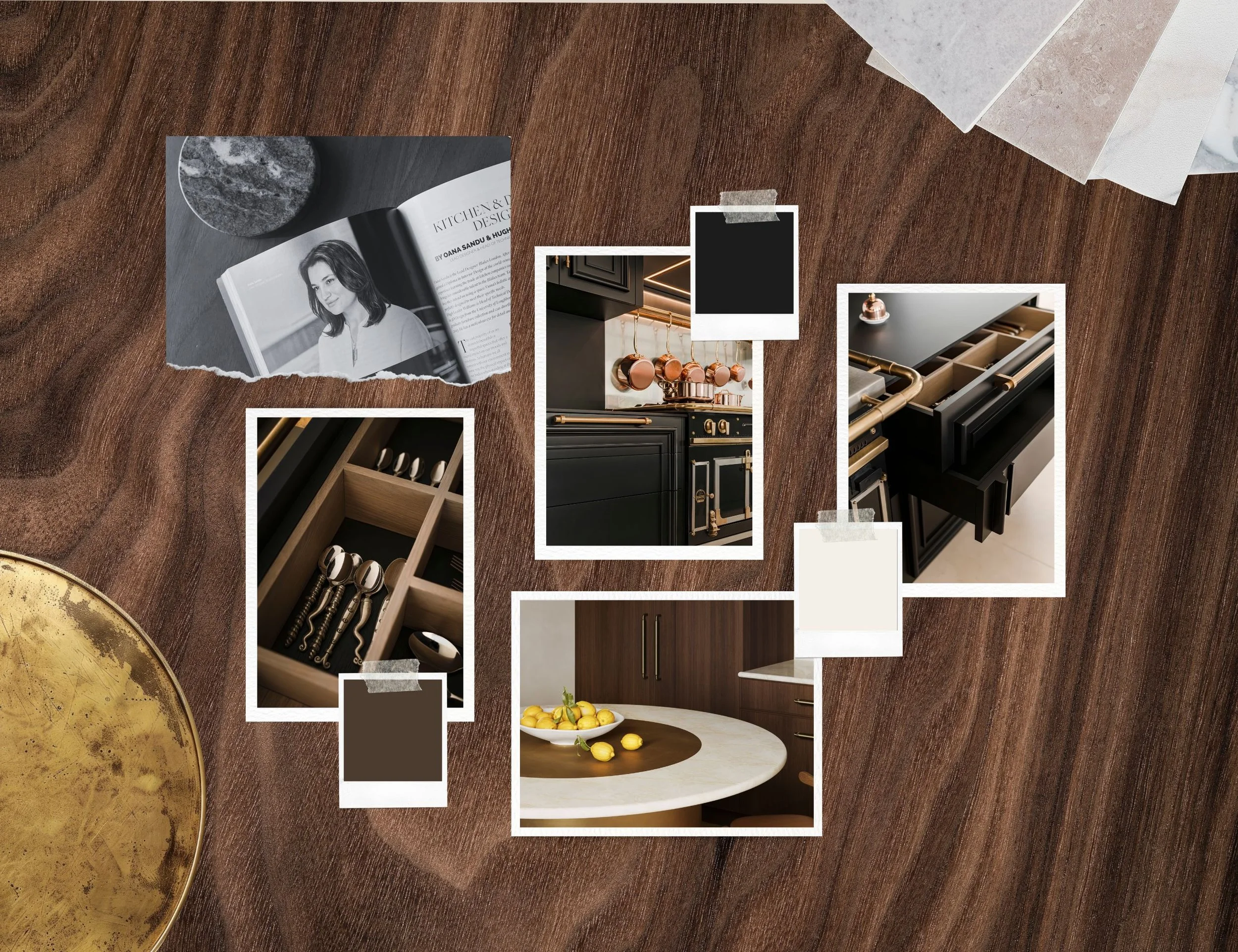
Brand Strategy + Squarespace Website for an Interior Designer
roa.design
The work was already high-end. The brand needed to catch up.
There was never a question of whether roa.design could produce exceptional work.
Oana had spent years immersed in luxury interiors and bespoke joinery, developing the kind of eye that notices what most people don't: proportion, materials, craftsmanship, functionality, and the hundreds of tiny decisions that separate something merely expensive from something genuinely well designed.
But the business around that expertise was still taking shape.
roa.design needed to communicate the calibre of the work, attract clients making significant investments in their homes, and establish a point of view in an industry where almost everyone talks about craftsmanship, timeless design and beautiful spaces.
Because when you're asking someone to trust you with a six-figure interior project, “we create beautiful interiors” isn't a positioning strategy.
Luxury Wasn’t the Positioning
The interiors industry has no shortage of beautiful websites… Beautiful photography. Beautiful typography. Beautiful kitchens. Beautiful words about craftsmanship, timelessness and attention to detail.
Which creates an interesting problem:
When everyone looks expensive, looking expensive doesn't make you different.
What stood out about Oana wasn't simply her aesthetic. It was the way she thinks.
She notices the details other people overlook. She understands that a kitchen can photograph beautifully and still be frustrating to live with. She thinks about proportion, materials, flow, craftsmanship and functionality as parts of the same problem.
Most importantly, she isn't interested in imposing a signature look on every client. Her role is to take hundreds of ideas, decisions and possibilities and turn them into something coherent — a home that feels unmistakably like the people who live there.
That became the foundation of the brand.
Clarity, individuality and exceptional craftsmanship.
Building a Brand That Could Grow
There was another layer to the project.
roa.design needed to feel personal without becoming completely dependent on Oana's personal brand.
The business is growing. The work spans bespoke kitchens, joinery and interiors. There are projects and clients across London, Athens and Europe. The brand needed enough personality to feel distinctive now, while having enough structure to become something bigger later.
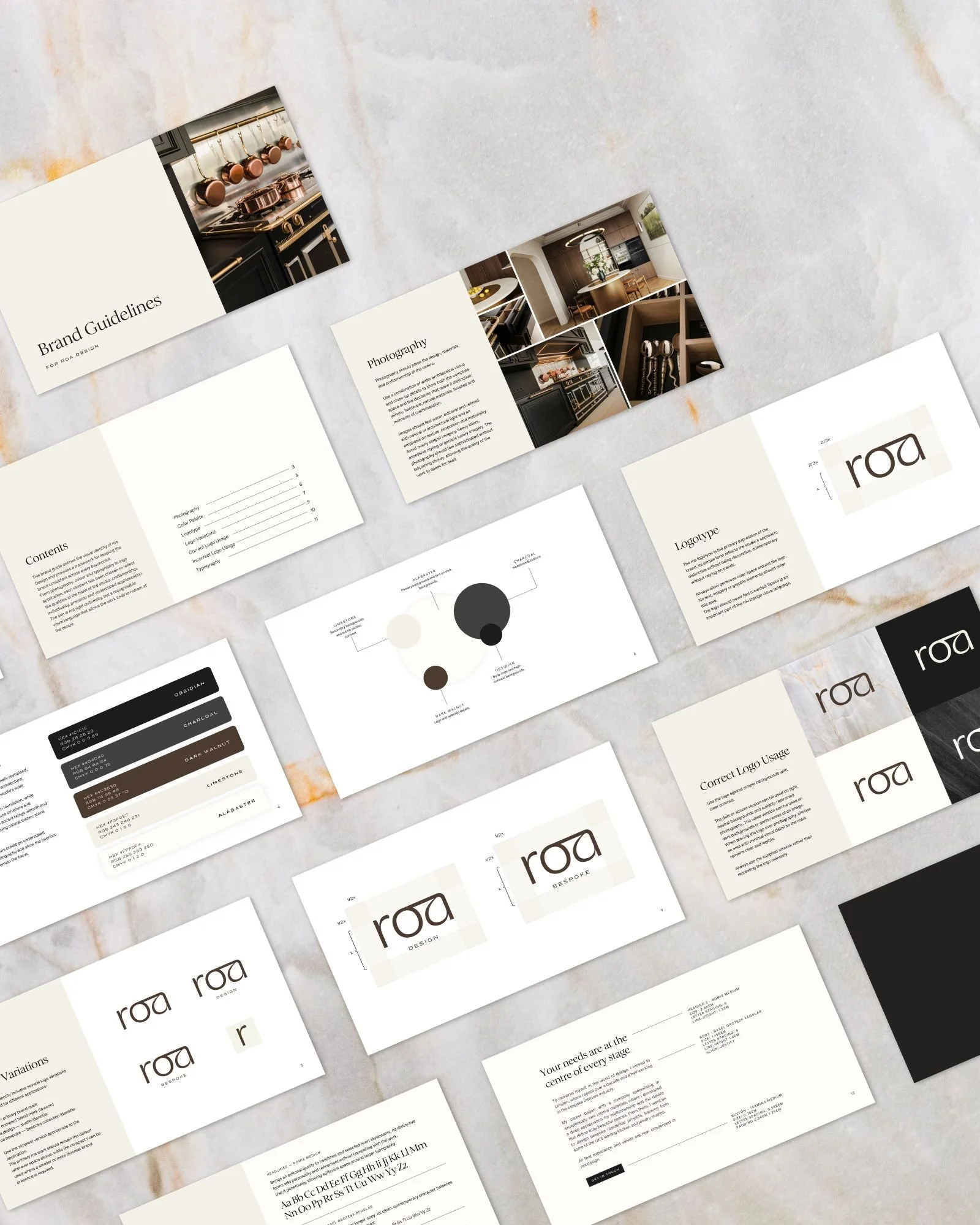
So we built a complete visual and verbal system around it.
A refined identity. A restrained neutral palette. Editorial typography. A family of logo variations. A voice that feels knowledgeable without becoming intimidating and confident enough that it doesn't need to keep announcing how luxurious everything is.
Because the people roa.design wants to work with don't need to be told what luxury looks like.
They already know.
Turning Strategy Into Design
Only then did we build the website.
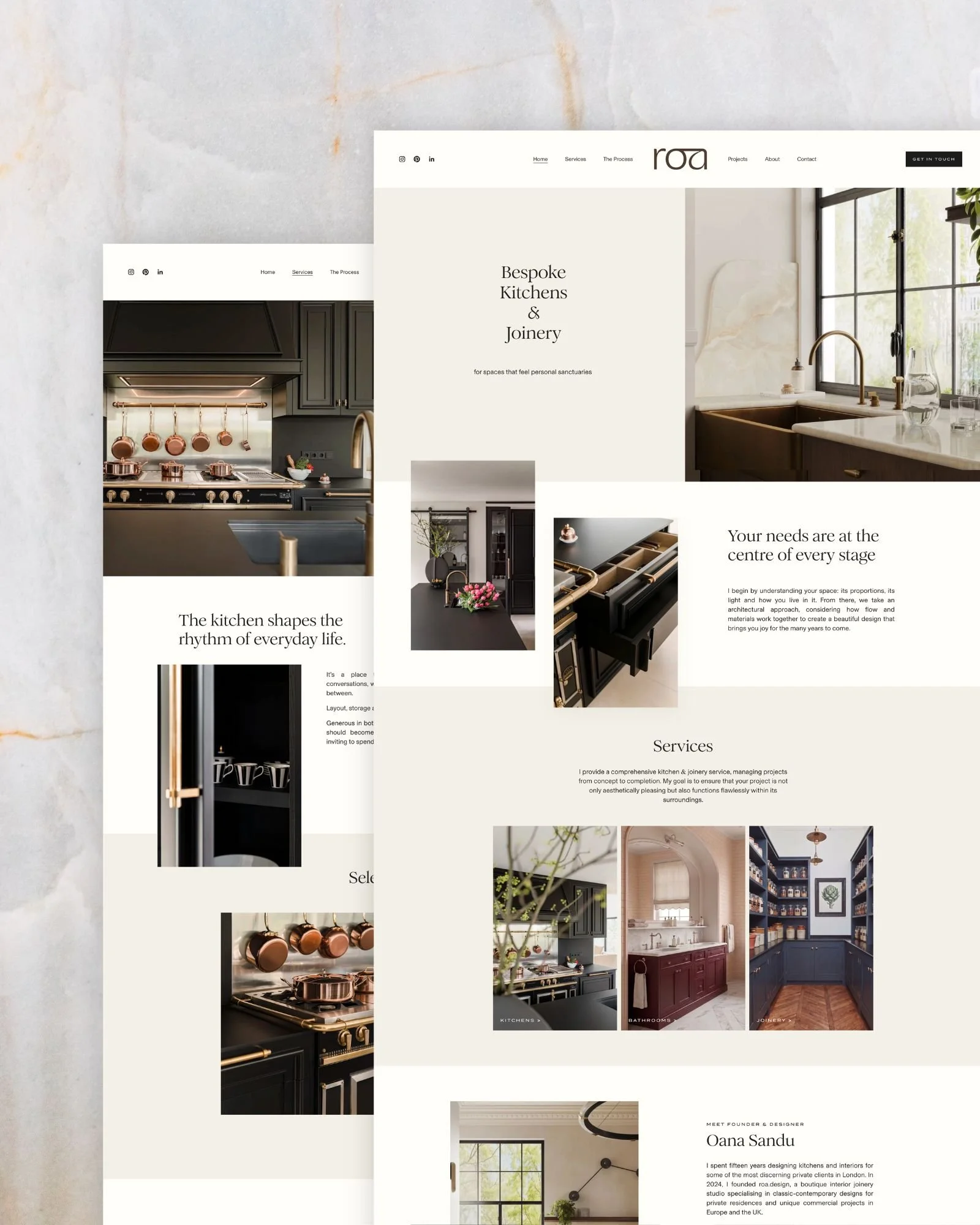
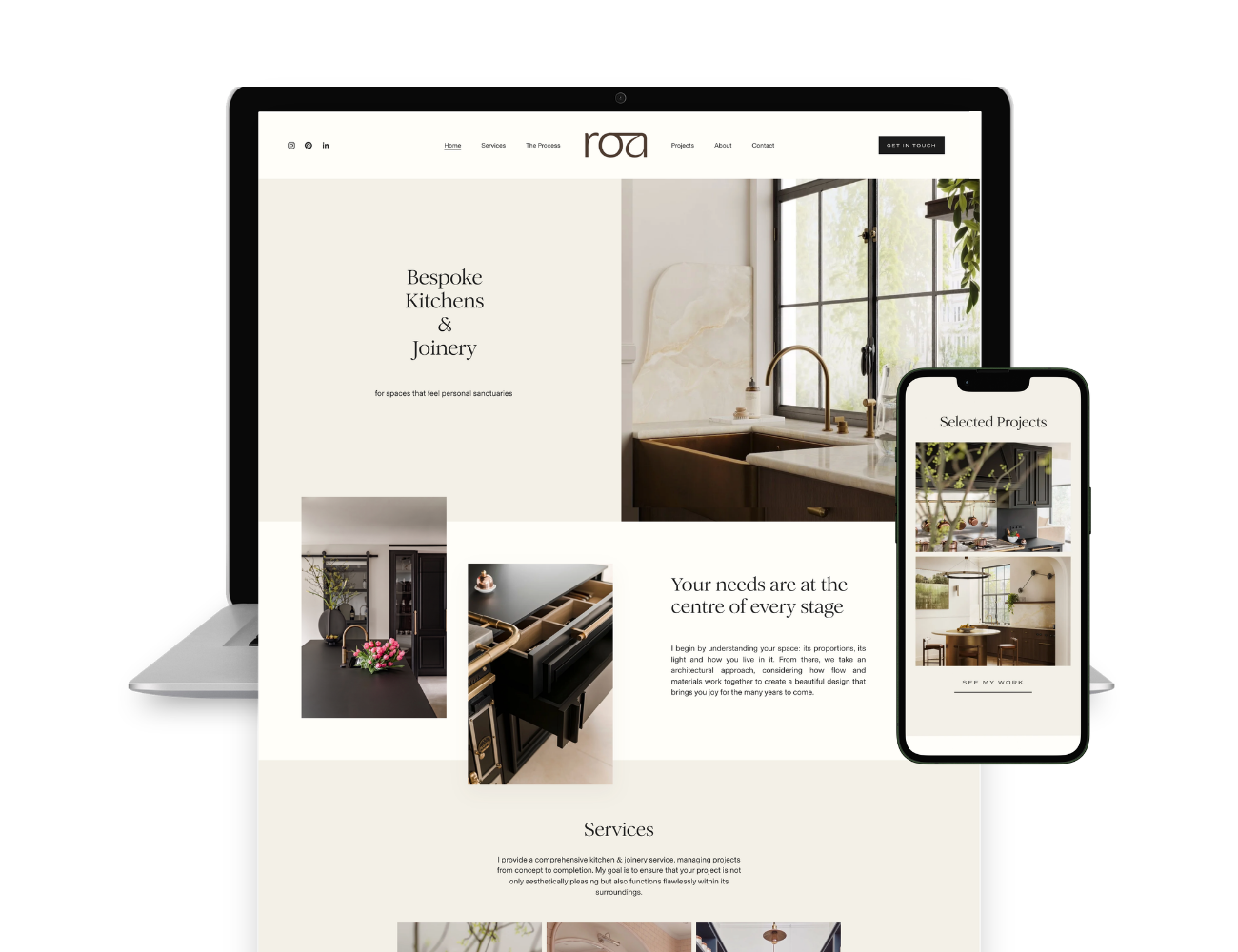
The design is intentionally quiet.
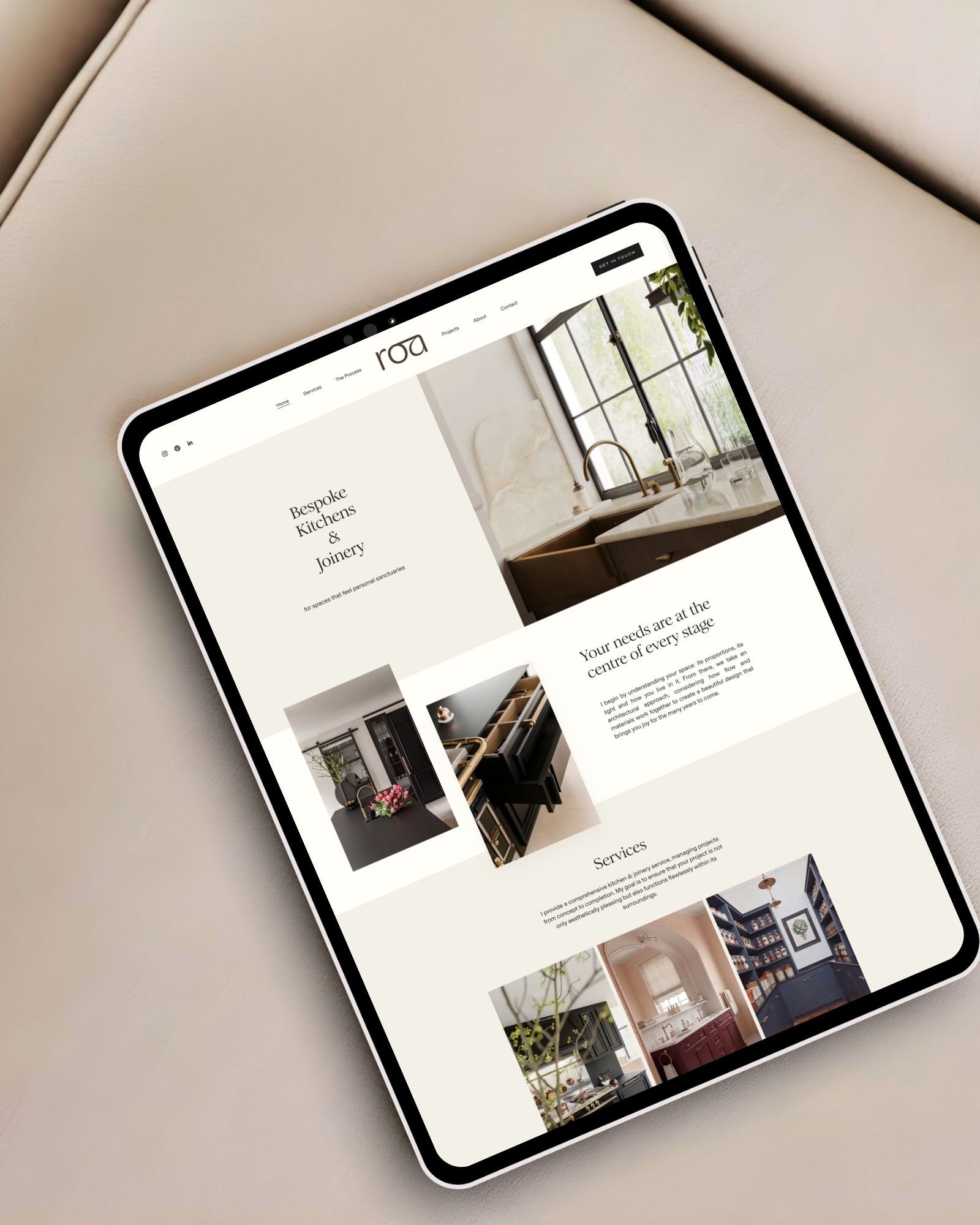
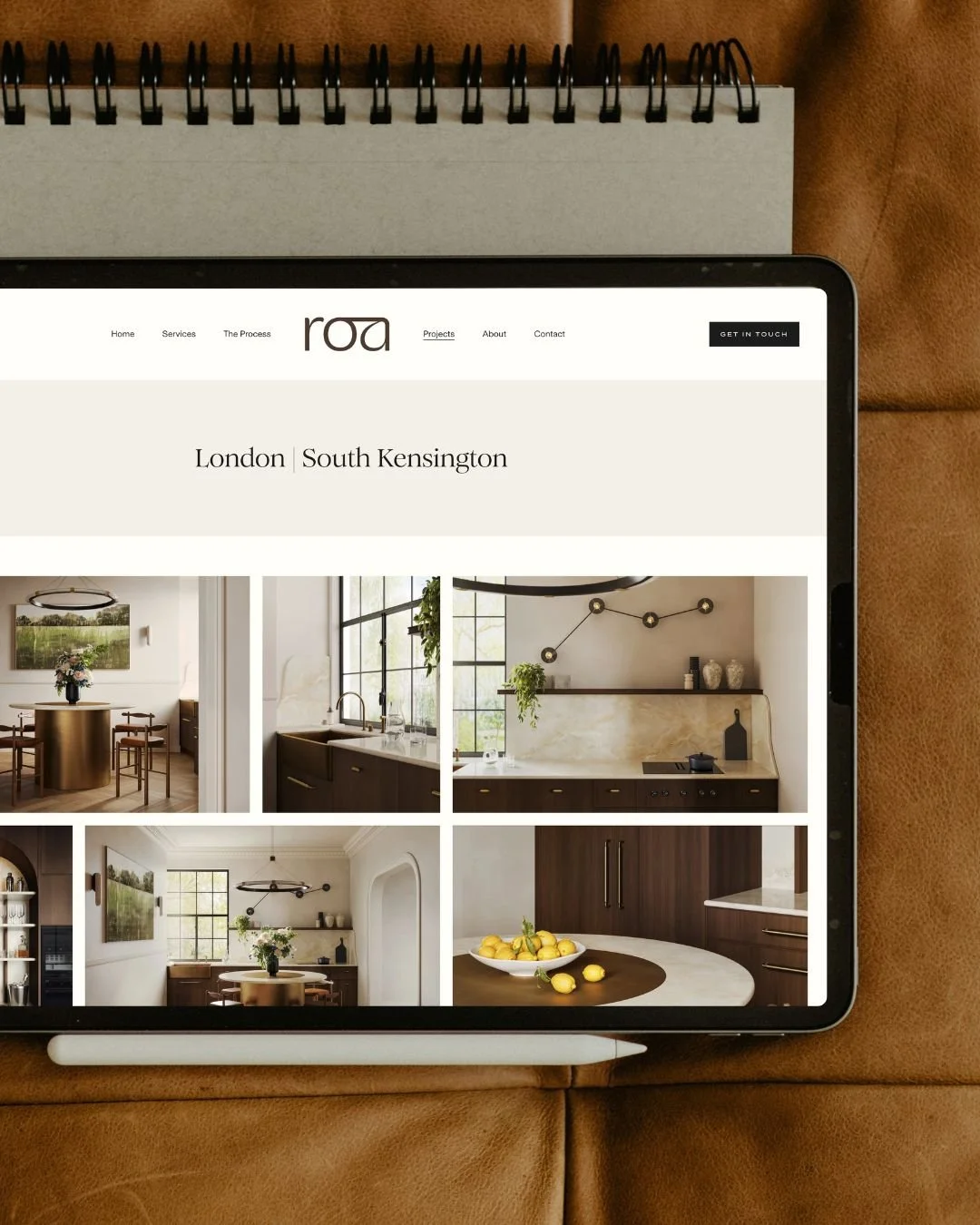
Generous space. Strong typography. Large-scale imagery. Subtle movement. Very little competing for attention.
Because with work like this, the website shouldn't be performing louder than the portfolio.
Instead, its job is to create context around the work: explain the thinking behind it, make a complex bespoke process feel understandable, and give someone considering a significant investment enough confidence to take the next step.
Behind that simplicity is considerably more happening than it appears.
Custom layouts and interactions. Responsive behaviour. Portfolio architecture. SEO strategy and structured data. Carefully considered service pages for bespoke kitchens and joinery. A content structure designed to help both search engines and humans understand exactly what roa Design does.
The goal wasn't to make the website look expensive but to make the entire business feel as resolved as the work it produces.
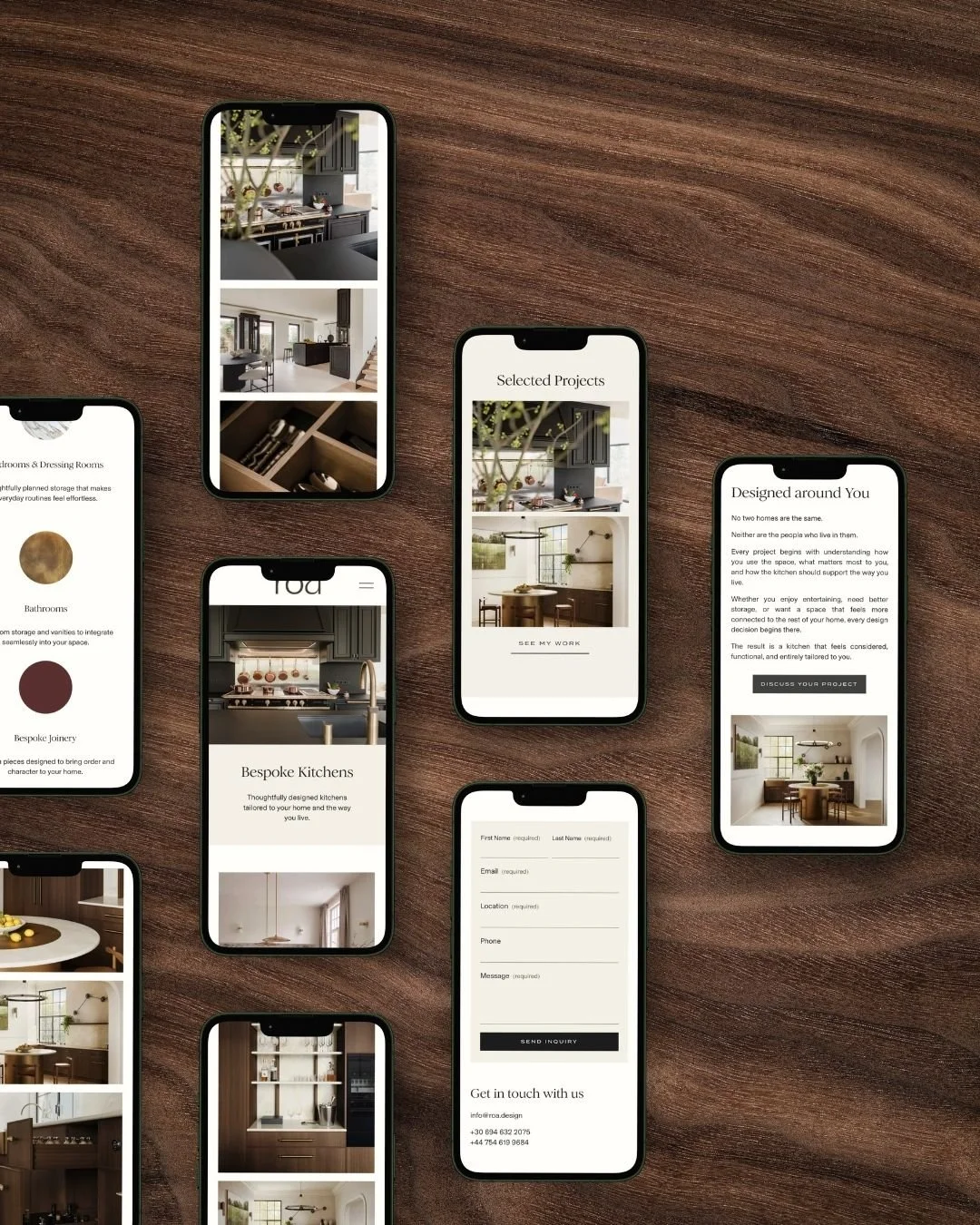
The Website Became the Framework
This project started as a website and became the foundation for how roa.design presents itself as a business.
The positioning shaped the messaging. The messaging shaped the visual identity. The strategy shaped the website. And the website brought all of it together into one coherent experience.
That's the part of website design I'm increasingly interested in.
Not choosing fonts and arranging photographs until something looks impressive but rather figuring out what a business needs to communicate, what its best clients actually need to understand before they buy, and then designing the entire experience around that.
Because for a business selling bespoke work at this level, a beautiful website is almost expected.
Clarity is what makes it convincing.
Project Scope
Strategy
Brand Strategy · Positioning · Audience Strategy · Messaging
Brand
Visual Identity · Logo System · Brand Voice · Brand Guidelines
Website
Website Strategy · UX · Copywriting · Squarespace Development · Custom CSS & JavaScript
Visibility
SEO Strategy · On-Page SEO · Structured Data · Mobile Optimization
Beautiful work isn’t enough to position a business.
When everyone in your industry can show beautiful work, your website needs to communicate something deeper: how you think, why your approach matters, and why the right client should trust you with the project.